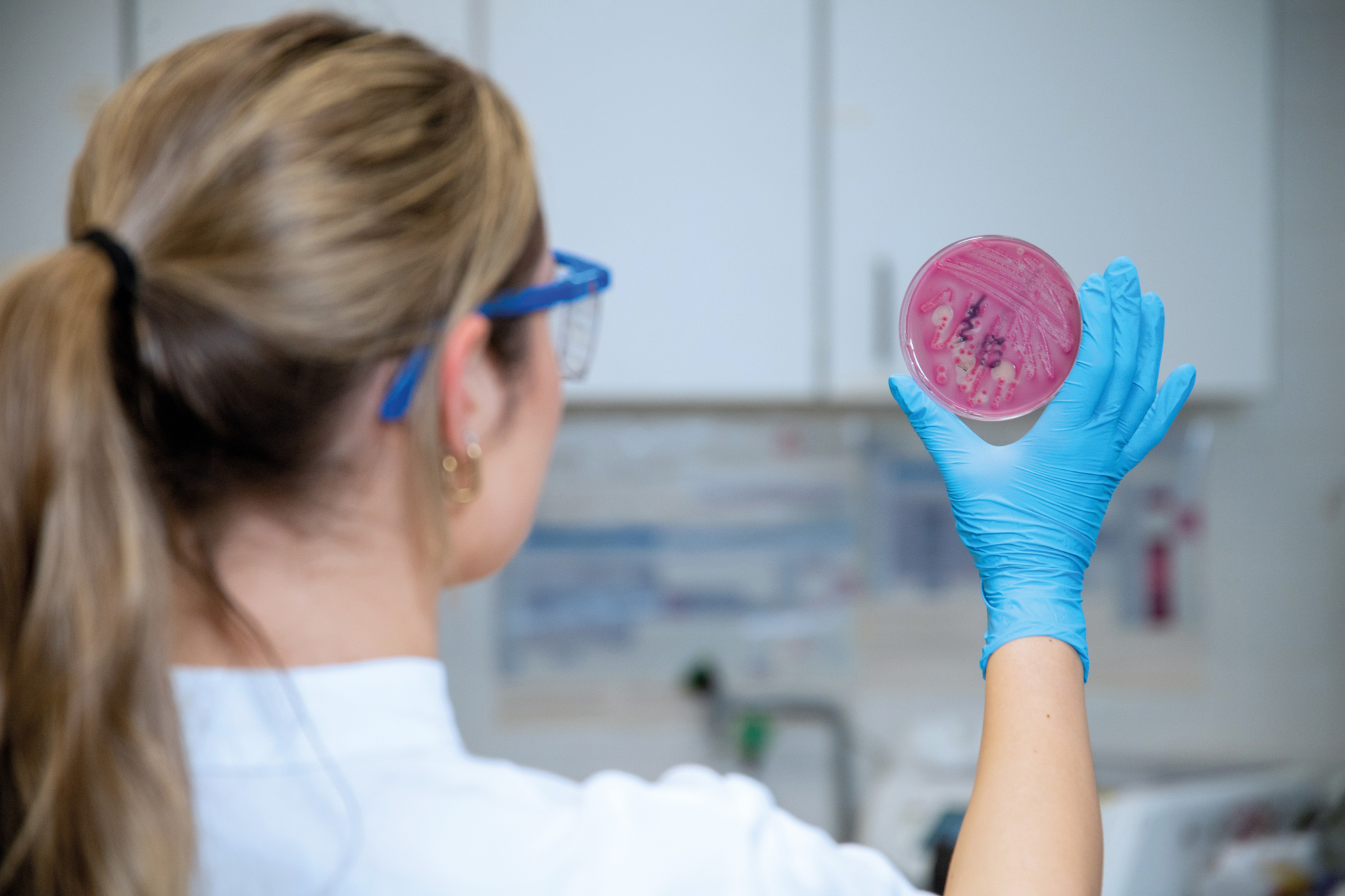
Biomedical Science

The student -knows the basics of the anatomy and physiology of the lymphatic organs and can explain their function and interaction. -has a basic knowledge of the fundamentals of immunology and their application in biomedical diagnostics. -can explain the biomedical laboratory diagnostics and knows basic terms relevant to the profession -knows the physical quantities, units and concentration data relevant to the profession and can carry out the basic calculations independently. -knows commodities and materials in the laboratory, including their functions and applications, as well as the waste categories and proper disposal. -can independently make all settings on the microscope correctly, taking ergonomic aspects into account, recognises sources of error and has knowledge of maintenance and cleaning. -can take the requirements of hygiene into account and "apply hygiene measures appropriately and as required and check compliance with them using suitable examination methods" (FH-MTD-AV, Annex 2, 17). -develops basic organisational and communication skills to cope with simple tasks. -can name relevant basic concepts of biomedical laboratory diagnostics as well as pharmacology and explain them to others.
- Semester:
- 1
- Type:
- Lecture compulsory course
- ECTS-points:
- 1
- Contents:
- -Biomedical laboratory diagnostics
-Basic anatomical terms: positional designations ...
-Overview of organs
-Technical terms (-ase, -ise, clinical pictures, tumour ...)
-Basic concepts of pharmacology (pharmacogenetics, pharmacodynamics and pharmacokinetics)
- Semester:
- 1
- Type:
- Lecture compulsory course
- ECTS-points:
- 1,5
- Contents:
- -Structure and physiology of the lymphatic organs
-Basics of immunology
-cellular and molecular components of the immune system
-Mechanisms of immune response, regulation and tolerance
- Semester:
- 1
- Type:
- Integrated course compulsory course
- ECTS-points:
- 3
- Contents:
- -technical vocabulary and common abbreviations
-handling of goods and consumables
-safety and hazards in the laboratory
-hazardous substances (incl. VEXAT and regulation)
-practical implementation of infection prevention measures
-hygiene measures in the workplace
-transmitted light microscopy
-waste management and disposal guidelines
-measuring volumes, weighing substances
-working materials
-calculations in connection with solutions
-carrying out physical separation processes (centrifugation)
The student -can "carry out measures for sample, reagent and equipment preparation in compliance with quality assurance criteria and taking into account the influencing variables and interference factors" (FH-MTD-AV, Annex 2, 8). -can "carry out the collection of test material (capillary and venous blood sampling) professionally and independently and establish a basis of trust with the patient by means of professional dialogue" (FH-MTD-AV, Annex 2, 6). -can "assess which data and parameters are necessary for patient and sample identification" (FH-MTD-AV, Annex 2, 5). -can "carry out measures for sample, reagent and equipment preparation in compliance with quality assurance criteria and taking into account the influencing variables and interference factors" (FH-MTD-AV, Annex 2, 8). -can "recognise method-specific, technical and biological interference factors and react appropriately to them" (FH-MTD-AV, Annex 2, 13) and "carry out the storage of test materials and reagents properly" (FH-MTD-AV, Annex 2, 15). -knows the basics of quality assurance and documentation in medical laboratories. -knows the definition of standards, factors, activities, measurement parameters and the different calculation methods -knows the definition of accuracy and precision and masters the calculation of positional and scattering dimensions.
- Semester:
- 2
- Type:
- Lecture compulsory course
- ECTS-points:
- 3
- Contents:
- -introduction to organic chemistry and repetition of relevant aspects of inorganic chemistry (functional groups, acids, bases, zwitterions, buffer systems, stereochemistry ...)
-carbohydrates
-proteins
-lipids
-enzymes
-hormones
-vitamins
-energy and metabolic rate of the cell
-structure and function of cellular membranes
-biochemistry of tumour cells
- Semester:
- 2
- Type:
- Integrated course compulsory course
- ECTS-points:
- 1
- Contents:
- -carrying out capillary and venous blood sampling
-shipping modalities
-validation guidelines
-calculation of position dimensions, scattering dimensions
-calculation of measurement results
-pH value and potentiometry
-basics of radiation protection
- Semester:
- 2
- Type:
- Lecture compulsory course
- ECTS-points:
- 1
- Contents:
- -Spatial and technical equipment of a cell culture laboratory
-Types and properties of cell cultures and their cultivation
-Knowledge of sterile technique and contamination in cell culture
-Use of cell cultures and research-relevant aspects
The student -can explain the anatomical structure of selected organs and name them based on the basic tissue types with the aid of a microscope. -knows pre-analytical factors influencing the test material as well as measures for the optimal preservation of samples and can "carry out the storage of test materials and reagents properly" (FH-MTD-AV, Annex 2, 15) -can select and carry out the appropriate methods of tissue preparation, tissue processing and the appropriate method of fixation for the analytical requirement according to the medical problem. -can carry out fabric embedding and the necessary preparatory work steps. -knows the functional principles and possible applications of microtomes and can independently prepare histological sections of selected specimens. -knows relevant dyes, colouring theories and reaction possibilities and can select and carry out practically relevant presentation methods on the basis of work instructions. -knows about specialised hygiene and safety measures and can apply them correctly according to the given requirements. -can assess "which data and parameters are necessary for patient and sample identification" (FH-MTD-AV, Annex 2, 5). -can assess preparations macroscopically and microscopically with regard to their technical quality, recognises sources of error in the various work processes and can avoid or rectify these as far as possible. -utilises a positive error culture to improve the quality of work for themselves and their team -recognises, processes and reacts to problems and thus reflects a problem-solving competence.
- Semester:
- 1
- Type:
- Integrated course compulsory course
- ECTS-points:
- 1,5
- Contents:
- -Cell differentiation and formation of tissue structures
-Basic tissue types: epithelial tissue, muscle tissue, nerve tissue, connective tissue, glandular tissue, parenchyma and stroma in the structure of selected organs
-Anatomy and histology of the heart, GI tract, gall bladder, liver, pancreas, lymphatic organs, urinary organs, thyroid gland, reproductive organs and skin
-Microscopy of physiological tissues
- Semester:
- 1
- Type:
- Integrated course compulsory course
- ECTS-points:
- 2,5
- Contents:
- -specialised hygiene and safety measures
-material transfer and sample identification (incl. sample transport)
-principles, devices, methods and implementation of tissue cutting, encapsulation, fixation, decalcification, paraffin embedding incl. casting
-cutting techniques (various microtome types) incl. frozen sectioning
-chemical basics of dyes, dyeing techniques and implementation of various dyeing methods
-microscopic assessment of section preparations (section and staining quality)
-automation of histotechnical work steps
-storage and preservation of test materials, reagents, tissues and sectional preparations
-basics of quality assurance, documentation, validation and interpretation of results
The student -knows the significance of immunohistological and molecular genetic examination methods in medical histopathology. -knows the pathogenesis, morphological tissue changes and markers of common diseases -can microscopically assess section and staining qualities of immunohistochemical reactions and selected molecular genetic tests on specimens. -can assess antibodies and their significance in the entire analysis phase and correctly assign them to the tissue with their staining pattern. -can establish a connection with the corresponding clinical pictures on the basis of the analysis results. -can name post-analytical measures (quality assurance, technical validation, documentation, transmission and archiving) (FH-MTD-AV, Annex 2, 1) and can apply these in the histopathological setting. -can "represent their own decisions responsibly to the outside world" (FH-MTD-AV, Annex 8, 2). -can "work according to professional, economic and ecological principles" (FH-MTD-AV, Annex 8, 6). -utilises a positive error culture to improve the quality of work for themselves and their team -justifies the need for new solutions with regard to error management -can coordinate work processes, plan efficiently in terms of time and solve new tasks independently with the aid of work documents.
- Semester:
- 2
- Type:
- Integrated course compulsory course
- ECTS-points:
- 2
- Contents:
- -general pathology of the gastrointestinal tract (GI), gall bladder, liver, pancreas, lymphatic organs, lungs, urinary organs, skin and genital organs
-regeneration and repair, tissue healing and necrosis (incl. disorders of homeostasis)
-microscopy of selected physiological and pathological tissues (colon carcinoma, gastritis, liver carcinoma, liver cirrhosis, haematochromatosis, pancreatic carcinoma, lymphoma, thyroid carcinoma, prostate carcinoma, breast carcinoma, cervical carcinoma, malignant melanoma)
- Semester:
- 2
- Type:
- Integrated course compulsory course
- ECTS-points:
- 2
- Contents:
- -principles and application of immunohistochemical reactions (incl. specific pretreatment and different detection systems)
-principles and implementation of molecular genetic examination methods on tissue
-microscopic assessment of sectional preparations (quality of reaction results)
-evaluation of the results (qualitative to semi-quantitative)
-possibilities of automation and use of digitalisation in the assessment of tissue images
-management of tissue banks
-quality assurance, documentation, validation and interpretation of results
The student -has an overview of the development of immunohaematology and transfusion medicine, has a sound knowledge of blood group characteristics and immunohaematologically relevant immunological principles and knows the clinical significance of the various blood marker systems. -knows the common analysis methods and techniques of immunohaematology. -is familiar with pre-transfusion examinations, has knowledge of the pathogenesis, clinic, diagnosis and therapy of autoimmune haemolytic anaemia and haemolytic neonatal disease and knows the causes and laboratory diagnostic consequences of transfusion reactions. -can assign the relevant parameters to the respective bioanalytical and medical question and can assess the validity of test results. -can "apply suitable laboratory analytical steps and measures for carrying out immunohaematological working methods" (FH-MTD-AV, Annex 2, 9). -can "organise the processing of the sample material in a sample-specific and logistically efficient manner" (FH-MTD-AV, Annex 2, 10), carry out the analyses of the test material independently using the appropriate detection methods and work in accordance with the requirements of quality management and the legal guidelines of transfusion medicine. -utilises a positive error culture to improve the quality of work for themselves and their team.
- Semester:
- 3
- Type:
- Lecture compulsory course
- ECTS-points:
- 2
- Contents:
- -genetic control and biochemical structure of blood group characteristics
-immunohaematologically relevant immunological principles
-blood group systems: ABO system, Rh system and other characteristic systems of erythrocytes
-immunohaematological analysis methods
-pre-transfusion examinations, mother-child serology, neonatal haemolytic disease
-autoimmune haemolytic anaemia
-transfusion reactions
- Semester:
- 3
- Type:
- Integrated course compulsory course
- ECTS-points:
- 2
- Contents:
- -preanalysis in immunohaematology
-areas of application of immunohaematological tests
-theoretical principles of the various detection methods
-carrying out standard manual and automated immunohaematological analysis procedures to determine the AB0 system, the Rhesus system and other important blood group systems
-pre-transfusion examinations and mother-child serology, including the legal basis and quality assurance
-documentation, validation and interpretation of the results
-quality assurance and error management
-interdisciplinary communication
The student -can "carry out measures for sample, reagent and device preparation in compliance with quality assurance criteria and taking into account the influencing variables and interference factors" (FH-MTD-AV, Annex 2, 8) -"can independently assess, technically validate, document, forward, archive and, if necessary, graphically present and statistically evaluate analysis results". (FH-MTD-AV, Annex 2, 16). -has knowledge of the basic use and effect of pharmaceutical ingredients of common therapeutic agents in haemostaseology and their impact on laboratory diagnostics. -is able to carry out selected parameters manually and/or automatically on the basis of the requirement and to interpret and critically reflect on the results in relation to physiological and pathological conditions. -takes into account the economic use of various resources in his/her professional activities. -has in-depth knowledge of the physiology and pathology of blood and bone marrow cells. He/she can describe the precursor cells of haematopoiesis and thus distinguish physiological blood pictures from haematological diseases. -can "microscopically assess and quantify cellular structures and structural changes" (FH-MTD-AV, Annex 2, 12). -can select and describe the appropriate analytical procedure according to the respective diagnostic question in haematology and haemostaseology. -carries these out in compliance with all current requirements for good analysis and laboratory practice and can establish the corresponding disease reference based on the respective analysis results and constellation of findings. -can select and describe any necessary further investigations, document and analyse the results using existing information technologies and link the results of investigations from different laboratory disciplines. -can "represent their own decisions responsibly to the outside world" (FH-MTD-AV, Annex 8, 2). -can "implement the communicative and organisational skills required to cope with complex interdisciplinary tasks" (FH-MTD-AV, Annex 8, 3).
- Semester:
- 4
- Type:
- Lecture compulsory course
- ECTS-points:
- 1,5
- Contents:
- -reactive and pathological changes in the blood count
-haemato-oncological diseases
-parasitic infectious diseases in haematology
-differential diagnostics
-immunophenotyping
-therapy
- Semester:
- 4
- Type:
- Integrated course compulsory course
- ECTS-points:
- 2
- Contents:
- -reactive and pathological changes in blood cells based on haemato-oncological case studies
-parameter interpretation based on defined clinical pictures
-evaluating test results and setting measures for further investigations (reflective testing)
-basic knowledge of immunophenotyping
- Semester:
- 4
- Type:
- Lecture compulsory course
- ECTS-points:
- 1,5
- Contents:
- -pathogenesis, clinic and therapy of congenital and acquired disorders of haemostasis
-haemostaseological drugs and their influence on diagnostics
-interpretation of results based on case studies
- Semester:
- 4
- Type:
- Integrated course compulsory course
- ECTS-points:
- 1,5
- Contents:
- -practical implementation of the analysis process (incl. quality management) using selected parameters of routine haemostaseological diagnostics (manual and automated)
-analysis of selected parameters
-automation in coagulation analysis
-interpretation of results based on case studies
-effective communication, appreciation and error culture
The student -recognises the importance of functional diagnostics as an interdisciplinary subject and the significance of functional diagnostic examinations for generall diagnostics. -has sound knowledge of communication models and can "conduct information and educational discussions professionally in the medical setting and establish a basis of trust with the patient or relatives" (FH-MTD-AV, Annex 8, 4) and motivate patients to cooperate. -knows positioning and transfer techniques and applies them appropriately to the situation. -has in-depth knowledge of the anatomical structure, physiological function, pathological changes and pharmacology of the respiratory tract, heart and blood circulation as well as the CNS and nerve tracts including cerebrospinal fluid. -has sound knowledge of respiratory physiological, cardiovascular and neurological examinations and can perform, validate, interpret and document these professionally as part of the functional diagnostic process. -can "recognise the limits of independent professional practice and make reference to the relevant legal regulations" (FH-MTD-AV, Annex 2, 3) and "recognise the responsibility of other healthcare professions and other professions and work together in a multi-professional team" (FH-MTD-AV, Annex 2, 4).
- Semester:
- 2
- Type:
- Integrated course compulsory course
- ECTS-points:
- 1,5
- Contents:
- -functional diagnostic analysis process in cardiology and pulmonology
-fundamentals of equipment technology and performance of respiratory physiological and cardiological-angiological examinations:
oECG, ergometry, spiroergometry
oblood pressure monitoring
ospirometry and body plethysmography
oBlood gas analysis
ospecial investigations
-quality assurance, interpretation and documentation of the results
- Semester:
- 2
- Type:
- Integrated course compulsory course
- ECTS-points:
- 1
- Contents:
- -functional diagnostic analysis process in neurology
-technical basics and realisation of
oelectroencephalography
oelectromyography
oelectroneurography
oevoked potentials
osleep laboratory
osonography of the vessels and nerves
ospecialised neurological examinations
-quality assurance, interpretation and documentation of the results
- Semester:
- 2
- Type:
- Lecture compulsory course
- ECTS-points:
- 2
- Contents:
- -anatomical structure, physiological function, pathological changes and relevant pharmacology of the respiratory tract and of the heart and blood circulation
-physical principles and clinical significance of respiratory physiological and cardiovascular examinations, in particular
oECG, ergometry, spiroergometry
ocardiac and vascular sonography
oblood pressure monitoring
ospirometry and body plethysmography
oblood gas analysis
ospecial investigations
-measurement methods and relevant measurement parameters
-quality management
- Semester:
- 2
- Type:
- Lecture compulsory course
- ECTS-points:
- 1,5
- Contents:
- -anatomical structure, physiological function, pathological changes and relevant pharmacology of CNS and nerve tracts incl. physiology of cerebrospinal fluid
-physical principles and clinical significance of neurological examinations, in particular
oElectroencephalography
oclectromyography
oelectroneurography
oevoked potentials
osleep laboratory
osonography of the vessels and nerves
ospecialised neurological examinations
-measurement methods and relevant measurement parameters
-quality management
- Semester:
- 2
- Type:
- Practice-oriented session compulsory course
- ECTS-points:
- 1
- Contents:
- -communication models
-communication in the medical setting
-information and educational talks
-positioning and transfer techniques
Hygiene The student -knows standards of hygiene, infection prevention and epidemiology and derives prophylactic measures from these. -takes hygiene requirements into account and recognises the importance of hygiene in the healthcare sector.Health promotion and prevention in healthcare systems The student -explains the basic concepts of health promotion, resilience, health literacy, climate literacy, health literacy and prevention within and outside its own division. -describes the importance of health-promoting measures both for themselves personally and for their clients/patients. -knows the basic principle of primary care in Austria and its tasks in connection with public health and health promotion.Emergency management The student -recognises life-threatening conditions and provides the appropriate first aid. -creates the basic monitoring and interprets these basic values. -Carries out initial measures in airway management.Legal basics 1 and healthcare systems The student -knows the job profiles and areas of expertise of the healthcare professions in Austria. -recognises the limits of independent professional practice and makes reference to the relevant legal regulations. -knows the organisational structures and political spheres of influence of the Austrian healthcare system as well as the basic principles of hospital management.Digitalisation in healthcare systems The student can explain selected basic terms from the field of digitalisation in healthcare. can explain selected information systems in the healthcare sector.Vocactional Studies The student knows the job profile and fields of activity in biomedical analysis. can "recognise the responsibility of other healthcare professions and other professions and work together in a multi-professional team" (FH-MTD-AV, Annex 2, 4).
- Semester:
- 1
- Type:
- Lecture compulsory course
- ECTS-points:
- 0,5
- Contents:
- -occupational profile and development of the profession in national and international comparison
-professional profile and fields of activity including future development prospects
-regional, national and international interest groups
-overlaps and demarcations with other professional groups
- Semester:
- 1
- Type:
- Lecture compulsory course
- ECTS-points:
- 0,5
- Contents:
- - definition of digitalisation in the healthcare context
- eHealth - definition of terms and areas of application (e.g. health telematics, telemedicine ...)
- digital interfaces in healthcare facilities (e.g. HIS, LIS, RIS2, SAP ...)
- current applications
- Semester:
- 1
- Type:
- Integrated course compulsory course
- ECTS-points:
- 0,5
- Contents:
- -basics and definitions of terms
-examples from practice (good practice)
-importance of health promotion and prevention for healthcare professionals, for clients/patients, for the healthcare system, for the economy.
-international and national developments in health promotion and health policy (nutrition, exercise, substance abuse such as alcohol, nicotine, drugs ...)
-age and gender aspects and forms of communication in health promotion
- Semester:
- 1
- Type:
- Lecture compulsory course
- ECTS-points:
- 0,5
- Contents:
- -general concept for hospital hygiene
-basic terms epidemiology, types of pathogens, infectiology, disinfection, sterilisation
-disposal in the hospital
-hand hygiene and personal hygiene
-immunisation
-healthcare associated infections
- Semester:
- 1
- Type:
- Integrated course compulsory course
- ECTS-points:
- 0,5
- Contents:
- -Basic Life Support (BLS) based on the European Resuscitation Council (ERC Guidelines 2021
-aspiration events/bolus events - with special attention to the management of the airway
-paediatric emergencies
-xABCDE scheme
-Customer Relationship Management (CRM) guidelines
-basic monitoring
-alerting the cardiac alarm team or MET team (algorithm)
-sim training with feedback (see CAS model)
-practical exercises in small groups
-reflection models/methods after stressful events
- Semester:
- 1
- Type:
- Lecture compulsory course
- ECTS-points:
- 1
- Contents:
- -job profiles and areas of expertise in the healthcare sector
- Pharmacist: Pharmacy Act
- Physician: Medical Act
- higher medical-technical service: Medical-Technical Services Act (biomedical analyst, dietician, occupational therapist, speech therapist, orthoptist, physiotherapist, radiological technologist)
- Healthcare and Nursing: Healthcare and Nursing Act (Higher Service for Healthcare and Nursing, Nursing Assistant, Nursing Assistant)
- Midwife: Midwifery Act
- Cardiotechnician: Cardiotechnician Act
- Masseur: Medical Masseur and Therapeutic Massage Act
- medical assistant professions: Medical Assistance Professions Act (disinfection assistant, plaster assistant, laboratory assistant, autopsy assistant, surgical assistant, surgery assistant, X-ray assistant, training therapist (sports scientist), new: surgical assistant)
- music therapist: Music Therapy Act
- psychologist: Psychology law
- psychotherapist: Psychotherapy Act
- rescue and ambulance service: Paramedics Act
- dentist, dental assistant and prophylaxis assistant: Dentists Act
- Austrian healthcare system and basic principles of hospital management
- Organisation of authorities and distribution of tasks in Austria:
Relationship between federal government - provinces - district administration - social insurance
- health structure plan
- Austrian social security system: health, accident and pension insurance
- Excursus:
- Tax-financed model, e.g. Great Britain, NHS or private insurance system, e.g. USA - "Obamacare"
- fundamentals and models of hospital financing: LKF model and DRG model
- operational and strategic controlling Key figures: Case numbers, bed utilisation, patient flows, recording of services ...
Basics of Quality and Data Management The student -explains the basics of data and quality management in the healthcare sector. -analyses and applies documentation standards in the various settings, reflects on them and supports quality-related activities (e.g. interface management, quality reporting, outcome quality measurement).Legal basics 2 The student -knows and understands the basic principles of the legal foundations and laws specific to the profession. -knows and understands the relevant job-specific aspects of data security.AI-supported Image Data Analysis for Diagnostic Healthcare Professions The student -knows the basics of AI-supported procedures and their application in medical diagnostics -trains concepts of AI-supported, diagnostic image evaluation.
- Semester:
- 3
- Type:
- Lecture compulsory course
- ECTS-points:
- 1
- Contents:
- -basics of data management
-basics and terms of quality management
-quality assurance and development measures
-application of digitalisation concepts in healthcare systems on the basics of legal framework conditions
- Semester:
- 3
- Type:
- Integrated course compulsory course
- ECTS-points:
- 1
- Contents:
- -fundamentals of artificial intelligence for biomedical science and radiological technology
-machine learning techniques (supervised learning, unsupervised learning, ...) for biomedical science and radiology technology
-deep learning for biomedical science and radiology technology
-Application of AI-supported methods for biomedical science and radiological technology
- Semester:
- 3
- Type:
- Lecture compulsory course
- ECTS-points:
- 0,5
- Contents:
- -profession-specific legal principles and laws
oliability (criminal liability, civil liability)
opatient rights, exemplary (patient charter, e.g. Upper Austria, adult protection law, living will law, dying will law)
ospecial provisions relevant to the profession (hospital law, e.g. hospital hygiene based on §8a KAKuG, medical product law, pharmaceutical law, accommodation law, home stay law ...)
-data protection and security
oart 1 DSG: Fundamental right to data protection
oGDPR: relevant provisions
oprofessional rights (right to confidentiality and data protection, explicit consent, handling of personal data, duty of confidentiality)
The student -deepens specialised knowledge in selected areas of biomedical science on the fundumental skills acquired in previous modules. -can "also apply the acquired knowledge in research, science, industry or veterinary medicine" (FH-MTD-AV, Annex 2, 18) -is aware of the need to follow current developments and integrates them into their own work -can continuously update and develop their own professional knowledge.
- Semester:
- 6
- Type:
- Lecture compulsory course
- ECTS-points:
- 1,5
- Contents:
- -prevention (check-ups in the context of gender medicine)
-nutrigenetics
-vitamins and trace elements
-drugs
-biomarkers for individualised therapies
-current developments
- Semester:
- 6
- Type:
- Integrated course compulsory course
- ECTS-points:
- 1,5
- Contents:
- The student
-has in-depth knowledge of immunohaematological analysis processes and is able to select and carry out possible further examinations in a logical manner.
-knows the medical and legal principles of transplantation medicine.
-can "recognise the limits of independent professional practice and make reference to the relevant legal regulations" (FH-MTD-AV, Annex 3).
-is familiar with the legal principles relevant to the profession in transfusion medicine and the quality assurance guidelines.
-knows further measures (haemovigilance) for quality assurance and error management
- Semester:
- 6
- Type:
- Integrated course compulsory optional subject
- ECTS-points:
- 1
- Contents:
- -processing of selected biomedical questions in diagnostics from the field of pathology
- Semester:
- 6
- Type:
- Integrated course compulsory optional subject
- ECTS-points:
- 1
- Contents:
- -current trends from peripheral areas of biomedical laboratory diagnostics (e.g. veterinary medicine ...)
- Semester:
- 6
- Type:
- Integrated course compulsory optional subject
- ECTS-points:
- 1
- Contents:
- -current trends in automation and digitalisation in the field of biomedical science
- Semester:
- 6
- Type:
- Integrated course compulsory optional subject
- ECTS-points:
- 1
- Contents:
- -current trends in specialised areas of biomedical schience (e.g. reproductive medicine ...)
- Semester:
- 6
- Type:
- Practice-oriented session compulsory optional subject
- ECTS-points:
- 1
- Contents:
- -application of cell culture techniques
The student -masters the theoretical principles of measurement analysis, measurement methods and separation procedures in clinical chemistry and implements the fundamentals of laboratory diagnostics including quality assurance. -has a sound knowledge of the anatomical structure, physiological processes and pathological changes of the thematised organs, as well as of the pharmaceutical interventions in their context and the effects in relation to the relevant laboratory medical examinations. -can "carry out measures for sample, reagent and equipment preparation in compliance with quality assurance criteria and taking into account the influencing variables and interfering factors" (FH-MTD-AV, Annex 2, 8). -can "recognise method-specific, technical and biological interference factors and react appropriately to them" (FH-MTD-AV, Annex 2, 13) and "carry out the storage of test materials and reagents properly" (FH-MTD-AV, Annex 2, 15). -has knowledge of common components and detection methods of medical analysis systems, understands their function in different applications and can implement simple maintenance and repair measures. -recognises errors in the laboratory diagnostic process and uses them to develop effective solution strategies in line with the positive error culture. -interprets what has been learnt, describes it to an appropriate extent and derives actions and strategies.
- Semester:
- 3
- Type:
- Lecture compulsory course
- ECTS-points:
- 1,5
- Contents:
- -special microscopic procedures
oincluding reflected light, dark field and phase contrast microscopy
o electron microscopy
-digital image processing
o digital image creation
o digital microscopy
-systematics of automated analysis systems (design, sample identification, sample processing)
-complex measurement techniques
ophysical-chemical separation processes (e.g. chromatography ...)
o spectroscopic methods (e.g. spectroscopy, mass spectrometry ...)
o electrochemical processes
o flow cytometry
-POCT devices
- Semester:
- 3
- Type:
- Integrated course compulsory course
- ECTS-points:
- 2
- Contents:
- -processing of test materials along the clinical-chemical laboratory diagnostics:
o sample collection
o sample preparation (incl. centrifugation)
o device preparation
o carrying out photometric analyses
o calculation, documentation, validation and interpretation of measurement results
o Implementation of quality assurance measures
- Semester:
- 3
- Type:
- Lecture compulsory course
- ECTS-points:
- 1,5
- Contents:
- -biomedical laboratory diagnostics (pre-analysis, analysis, post-analysis) in clinical chemistry
-basic concepts of measurement analysis
-basic measurement methods and separation procedures in clinical chemistry
-basics of quality assurance
- Semester:
- 3
- Type:
- Lecture compulsory course
- ECTS-points:
- 2,5
- Contents:
- -physiological function, pathological changes, pharmacological interventions and relevant laboratory tests of selected organs/systems (e.g. gastrointestinal tract, cardiovascular system, liver ...)
-disease patterns (clinic, diagnostics, therapy) of the corresponding organs/systems
The student -has a sound knowledge of the pathological changes in certain organs/systems and the associated common pharmacological interventions and can interpret laboratory results in order to verify the suspicion of a certain clinical picture. -can make a targeted selection from the measurement methods for different requirements of clinical chemistry investigations, fully implement the laboratory diagnostic process and take into account the measures necessary for quality-assured analysis. -can use their knowledge of the functioning of automated and digital systems in the field of clinical-chemical laboratory diagnostics to recognise errors at an early stage and contribute effectively to solving problems. -coordinates the work processes in a way that conserves resources and can therefore "work according to professional, economic and ecological principles" (FH-MTD-AV, Annex 8, 6). -can cooperate effectively and respectfully with colleagues to fulfil tasks. -utilises knowledge of digital interfaces, the transfer and processing of health data to support diagnosis and troubleshooting in communication with information technology service providers.
- Semester:
- 4
- Type:
- Integrated course compulsory course
- ECTS-points:
- 1,5
- Contents:
- -IT & digitalisation in the healthcare sector
-IT in the hospital
-diagnostic cycle Laboratory
-interfaces
-types of data transmission
-digital communication in hospitals
- Semester:
- 4
- Type:
- Integrated course compulsory course
- ECTS-points:
- 2
- Contents:
- -electrophoresis and immunofixation
-practical consolidation of measurement analysis
-automation in clinical chemistry (equipment preparation, maintenance, settings, measurements, reagent management, quality management and documentation, problem-solving strategies)
-data interpretation and error management
-collaboration and communication in the context of service provision
-economical use of resources
- Semester:
- 4
- Type:
- Lecture compulsory course
- ECTS-points:
- 2,5
- Contents:
- -Clinic, diagnostics, therapy and relevant laboratory tests including interpretation of relevant clinical pictures of selected organs/systems (e.g. gall bladder, pancreas, kidney, endocrine system ...)
-Metabolic diagnostics (carbohydrate, lipid, protein, purine, iron, bone metabolism)
-Tumour marker
-Endocrine system
-Therapeutic drug monitoring
-Toxicology and drugs
-Vitamins and trace elements
-Inflammation diagnostics
- Semester:
- 4
- Type:
- Lecture compulsory course
- ECTS-points:
- 1,5
- Contents:
- -consolidation of measurement analysis
-special measurement methods in clinical chemistry
-automation & digitalisation in clinical chemistry
-extended quality management
The student -has in-depth knowledge of the structure and function of the immune system, its modes of reaction and can understand the pathogenesis of immune-mediated diseases. -knows the significance of immunology as an interdisciplinary subject and the importance of immunological diagnostics. -knows the basic principles required to understand common immunological analyses and can select common manual and mechanised detection methods according to the issue at hand and carry them out independently using different sample material with working instructions. -can carry out routine immunological methods independently and is aware of the importance of digitalisation, standardisation, quality assurance and documentation. -knows the importance of antibodies in therapy and diagnostics. -has knowledge of signal transduction. -can reflect on what he/she has learnt and pass it on appropriately as well as instruct complex actions and strategies.
- Semester:
- 3
- Type:
- Lecture compulsory course
- ECTS-points:
- 1,5
- Contents:
- -production, function and use of recombinant antibodies
-vaccine production and its authorisation
-genome editing
-cell signalling and pathways
-tumour immunology
- Semester:
- 3
- Type:
- Lecture compulsory course
- ECTS-points:
- 2
- Contents:
- -acute and chronic infection
-allergy
-autoimmune diseases
-malfunctions of the immune system
- Semester:
- 3
- Type:
- Integrated course compulsory course
- ECTS-points:
- 1,5
- Contents:
- -immunological working techniques
-autoimmune diagnostics
-allergy diagnostics
-influencing variables and disruptive factors
-quality management and quality assurance
-quality criteria for diagnostic procedures in immunology
-group communication and developing collaborative solutions
-self-organised and efficient work
-offer and accept assistance
-interdisciplinary understanding
The student -has knowledge of the prerequisites, areas of application, possibilities, significance and importance of applied clinical cytodiagnostics as an interdisciplinary subject and its consequences for therapeutic measures. -can describe the anatomical structure of associated organ systems, their physiological function and their pathological changes. -knows the morphology of physiological and pathological cell images and can establish a connection to corresponding clinical pictures. -knows the necessary criteria and procedures in the cytological analysis process, including the preparation of findings, and can explain these. -can independently carry out the laboratory diagnostics in compliance with all necessary quality assurance measures and document the examination results using the available technologies and assess their medical validity. -can "recognise the limits of independent professional practice and make reference to the relevant legal regulations" (FH-MTD-AV, Annex 2, 3) and "recognise the responsibility of other healthcare professions and other professions and work together in a multi-professional team" (FH-MTD-AV, Annex 2, 4). -can reflect on what they have learnt and pass it on appropriately.
- Semester:
- 1
- Type:
- Integrated course compulsory course
- ECTS-points:
- 2
- Contents:
- -areas of application for clinical cytodiagnostics
-anatomy of the female genital tract
-physiological cell images and neoplasia
-criteria for altered benign and malignant cells
-application of gynaecological and extragenital cytology
-cell extraction
-gynaecological cytology
-physiological cell images,
-benign changes,
-dysplasia,
-malignant cell images
-nomenclatures
-extragenital cytology
-respiratory tract, urinary tract, etc.
-cell extraction
-physiological cell images
-benign changes
-cell images
-automated screening systems
- Semester:
- 1
- Type:
- Integrated course compulsory course
- ECTS-points:
- 1
- Contents:
- -types of cell extraction
-preparation production (e.g. smear technique, cytocentrifugation ...)
-implementation of fixation, detection and staining methods
-thin film preparation
-microscopic assessment of preparations from gynaecological cytology including classification in the nomenclature
-quality assurance, documentation, validation and interpretation of results
The student -can describe cellular functions and understand cell biological processes. -has a sound knowledge of the basic building blocks of the human genetic code, understands their structure, function and mechanisms of transmission. -understands protein synthesis as the result of the translation of genetic information. -can describe simple genetic mutations. -knows the principles and application of the relevant molecular biology techniques and analytical procedures and can carry them out independently. -understands the basics of stem cell physiology -can "carry out measures for sample, reagent and device preparation in compliance with quality assurance criteria and taking into account the influencing variables and interference factors" (FH-MTD-AV, Annex 2, 8). -is informed about important legal principles. -can "implement the communicative and organisational skills required to cope with complex interdisciplinary tasks" (FH-MTD-AV, Annex 8, 3).
- Semester:
- 1
- Type:
- Lecture compulsory course
- ECTS-points:
- 1,5
- Contents:
- -Isolation of DNA, RNA and proteins
-Tools in molecular biology (restriction enzymes, polymerases, ligases, gene probes, vectors)
-Gel electrophoresis, Western blots
-Detection of PCR products (real-time PCR, dPCR)
-Sequencing (Sanger sequencing, NGS, cancer panels)
-Microarray technologies
-Molecular biological limits and detection limits
-Automation in molecular biological diagnostics
- Semester:
- 1
- Type:
- Integrated course compulsory course
- ECTS-points:
- 1,5
- Contents:
- -Working in the molecular biology laboratory
-Preanalytics for molecular genetic analyses
-Isolation of nucleic acids
-Amplification of nucleic acids
-Detection of PCR products
-Quality assurance, documentation and interpretation of the results
- Semester:
- 1
- Type:
- Lecture compulsory course
- ECTS-points:
- 2,5
- Contents:
- -Basics of cell biology:
oComponents and structure of cells (cell nucleus, chromosomes and cell cycle, mitochondria, ribosomes, endoplasmic reticulum, Golgi apparatus)
oPhysiological properties and function of the cell (cell membrane, cell structure, cell contact, transport and communication mechanisms, cytoskeleton)
oBasics of cell division (mitosis, meiosis) and cell death (apoptosis, necrosis)
oStem cell biology
-Basics of molecular biology:
oStructure and composition of DNA and RNA
oReplication
oTranscription
oTranslation
oGene expression
oGenetic variations (mutations, polymorphisms)
The student -understands the mechanism of gene regulation. -knows the significance and areas of application of human genetics and has gained an insight into the current techniques. -applies working and analytical methods of molecular biology. -is familiar with bioinformatics databases for analysing and interpreting the results. -knows research-relevant aspects from the molecular field and genetic engineering and can "research current scientific findings in the national and international field" (FH-MTD-AV, Annex 9, 1). -can "recognise method-specific, technical and biological disruptive factors and react appropriately" (FH-MTD-AV, Annex 2, 13). -can document and validate examination results and knows how to interpret findings and link them to other specialisms. -has the ability to communicate in an interdisciplinary manner and to work in co-operation. -can "contribute to the further development of the profession" (FH-MTD-AV, Annex 8, 8).
- Semester:
- 4
- Type:
- Integrated course compulsory course
- ECTS-points:
- 3
- Contents:
- -gene regulation incl. epigenetics
-gene mutations and repair mechanisms
-areas of application of human genetics using selected clinical pictures, inheritance patterns and family tree analyses
-special areas of tumour diagnostics
-biotechnical basics of genetic engineering incl. genome editing
-bioinformatic databases and analyses
-integration of current research results
-bioethical aspects in molecular diagnostics
- Semester:
- 4
- Type:
- Integrated course compulsory course
- ECTS-points:
- 2
- Contents:
- -application of information technologies (sequence databases, genetic databases)
-introduction to cytogenetic analysis methods
-qualitative and quantitative PCR
-(in-silico) cloning
The student -can recognise the nature of a clinical trial and its objectives, assess its feasibility and usefulness and distinguish it from routine activities. -can recognise study-relevant problem areas in the professional field and work on these as part of a research project. -knows the necessary statistical tools and applies them correctly.
- Semester:
- 4
- Type:
- Integrated course compulsory course
- ECTS-points:
- 2
- Contents:
- -inductive statistics
-interpretation of the collected data
-definition of a clinical trial
-types and phases of clinical trials
-safety precautions in the conduct of clinical trials
-ethics committee
-qualification profile and activities of the study administrator
-procedure of a clinical trial
-GCP
The student -can "understand the request with regard to the requested analyses, assess whether the available test material is suitable for the requested biomedical analyses and, if necessary, clarify with the responsible person any missing relevant information or the need to resubmit samples". (FH-MTD-AV, Annex 2.2) -can "carry out the collection of the examination material professionally and independently and establish a basis of trust with the patient by means of professional dialogue" (FH-MTD-AV, Annex 2, 6). -has knowledge of the components and processes of haemostasis in vivo and in vitro. -has knowledge of the various detection methods relevant to haematological and haemostaseological diagnostics (including automation and digitalisation) and can relate these to the analyses. -knows the anatomy and physiology of the haematopoietic organs and can explain haematopoiesis. -can list the blood composition and its components and describe the tasks of the blood components. -can name the cell criteria and changes in erythrocytes and blood cells and describe their morphology in the peripheral blood smear. -can assess and quantify physiological "cellular structures and structural changes microscopically" (FH-MTD-AV, Annex 2, 12). -"realistically assess their own abilities with regard to technical, organisational, coordinating and administrative professional requirements" (FH-MTD-AV, Annex 8, 1).
- Semester:
- 3
- Type:
- Lecture compulsory course
- ECTS-points:
- 1,5
- Contents:
- -blood composition and tasks
-stem cells and haematopoietic organs
-haematological analysis process
-automation & digitalisation in the haematology laboratory
-blood count and its flags
-anaemias and their diagnostic consequences
- Semester:
- 3
- Type:
- Integrated course compulsory course
- ECTS-points:
- 2
- Contents:
- -sample material collection and sample preparation for the laboratory diagnostic process, as well as further diagnostic methods based on case studies
-quantitative and qualitative assessment of blood cells in the peripheral blood count and bone marrow
-QM management in the haematological laboratory diagnostic including haematological process management
odevelopment of a quality-assured process understanding from pre-laboratory diagnostic to the creation of technically validated findings
-haematological working techniques including automation & digitalisation
-application of diagnostic methods
- Semester:
- 3
- Type:
- Lecture compulsory course
- ECTS-points:
- 1,5
- Contents:
- -components and processes of haemostasis (in vivo and in vitro)
-pre-laboratory diagnostics, laboratory diagnositc and post-laboratory diagnostic incl. quality assurance
-parameters of routine haemostaseological diagnostics and their indications
-technologies and detection methods (incl. PFA, ROTEM, aggregometry, molecular genetics, digitalisation)
The student -knows the criteria of structural and process quality that are decisive in the laboratory and understands their interdependence. -can "carry out the biomedical laboratory diagnostic as part of the overall medical process based on the doctor's order; this process comprises the work steps of pre-analysis, planning, carrying out the analysis and post-analysis (quality assurance, technical validation, documentation, transmission and archiving)" (FH-MTD-AV, Annex 2, 1). -can independently initiate, plan and realise a project in a problem-conscious manner.
- Semester:
- 6
- Type:
- Lecture compulsory course
- ECTS-points:
- 1,5
- Contents:
- -laboratory organisation
o structural quality
o personnel management (planning, leadership, training ...)
oWorkplace design (process-orientated, economical, ergonomic)
- process quality
o functional sequence in the analysis process (sample flow, data transfer, release of findings)
o standards
-current developments
- Semester:
- 6
- Type:
- Integrated course compulsory course
- ECTS-points:
- 2
- Contents:
- -quality management processes (SOP, procedural instructions, etc.)
-batch testing in the laboratory (reagents, control material)
-key points of internal quality assurance measures and possibilities
-read standards correctly
-process descriptions (theory and practice)
-audits
-documentation options
-influence of environmental conditions on the quality of the analysis
-competence requirements, competence assessments
-metrological traceability, calibration
-validation and verification
-error management, correction processes
-risk management
-utilising complaint management correctly
The student -knows the general principles of medical microbiology excluding viruses. -has knowledge of medically relevant pathogens of infectious diseases including epidemiology, pathogenesis, clinic, course of infection, diagnostics, therapy and prevention. -can describe the anatomical structure of associated organ systems, their physiological function and their pathological changes. -can name the basics of pharmacogenetics, pharmacodynamics and pharmacokinetics of anti-infectives and explain the mode of action and therapeutic applications of anti-infectives. -knows antibiotic classes, resistance mechanisms, methods for susceptibility testing and their significance as well as the basics of antibiotic stewardship. -knows the key test materials for the microbiological analysis process and is familiar with the necessary pre-analytical measures. -can "organise the processing of the sample material in a sample-specific and logistically efficient manner" (FH-MTD-AV, Annex 2, 10). -knows the common techniques and methods used in the diagnostic process for the identification and sensitivity testing of microorganisms and can carry them out and "organise them efficiently" (FH-MTD-AV, Annex 2, 10). -can assign the relevant examinations to the respective problem and "apply suitable laboratory analytical steps and measures" (FH-MTD-AV, Annex 2, 9) as well as "carry out the analyses [...] independently" (FH-MTD-AV, Annex 2, 11). -can name post-analytical measures (quality assurance, technical validation, documentation, transmission and archiving) (FH-MTD-AV, Annex 2, 1) and can apply these in a microbiological setting. -recognises mistakes and develops new solution strategies from them in the spirit of a positive error culture. -can work together intra- and interdisciplinary in different team settings.
- Semester:
- 1
- Type:
- Lecture compulsory course
- ECTS-points:
- 2,5
- Contents:
- -Anatomy and physiology as well as epidemiology, pathogenesis, clinic, course of infection, diagnostics, therapy and prevention of infectious diseases (caused by bacteria, fungi, parasites, prions) of selected organ systems
-Fundamentals of pharmacogenetics, pharmacodynamics and pharmacokinetics of anti-infectives (antibiotics, antivirals, antifungals, antiparasitics)
-Mode of action and therapeutic applications of anti-infectives
-Resistance mechanisms, resistance testing
-Antibiotic classes
-Antibiotic stewardship
-New therapeutic approaches
- Semester:
- 1
- Type:
- Lecture compulsory course
- ECTS-points:
- 1,5
- Contents:
- -Types of microorganisms and classification
-General bacteriology (cell structure, morphology, physiology, genetics, taxonomy, epidemiology, systematics)
-General mycology and parasitology (cell structure, morphology, physiology, genetics, taxonomy, epidemiology, systematics)
-Selected bacterial, mycological and parasitological pathogens
-Basics of microbiological diagnostics
- Semester:
- 1
- Type:
- Integrated course compulsory course
- ECTS-points:
- 2,5
- Contents:
- -application of subject-specific principles of hygiene and laboratory basics
-central test materials and corresponding pre-analysis
-classification of microbiological diagnostics in the overall diagnostic process
-microbiological analysis process (cultivation, identification and sensitivity testing of bacteria and sprout fungi)
-quality assurance, documentation, technical validation and interpretation of the results
The student -has basic knowledge of microorganisms (e.g. viruses, prions, bacteriophages, bacteria ...) and knows relevant pathogens of infectious diseases including their epidemiology, pathogenesis, clinic, course of infection, diagnostics, therapy and prevention. -is familiar with the key test materials for the microbiological analysis process, knows about the necessary pre-analytical measures and can "organise the processing of the sample material in a sample-specific and logistically efficient manner" (FH-MTD-AV, Annex 2, 10). -can assign the relevant examinations to the respective problem and "apply suitable laboratory analytical steps and measures" (FH-MTD-AV, Annex 2, 9) as well as "carry out the analyses [...] independently" (FH-MTD-AV, Annex 2, 11). -can establish a connection with the corresponding clinical pictures on the basis of the diagnostical results and select and carry out possible further examinations logically. -can carry out the laboratory diagnostic process for urine, including macroscopic and microscopic urine analyses, and combine the results across disciplines. -can name post-analytical measures (quality assurance, technical validation, documentation, transmission and archiving) (FH-MTD-AV, Annex 2, 1) and apply these in a microbiological setting. -recognises mistakes and uses them to develop new solution strategies in the spirit of a positive error culture. -can work together intra- and interdisciplinary in different team settings.
- Semester:
- 2
- Type:
- Lecture compulsory course
- ECTS-points:
- 1,5
- Contents:
- -special bacterial pathogens
-quality management
-automation and digitalisation in microbiology
- Semester:
- 2
- Type:
- Integrated course compulsory course
- ECTS-points:
- 2
- Contents:
- -application of subject-specific principles of hygiene and laboratory basics
-central test materials and corresponding pre-analytics
-classification of microbiological diagnostics in the complete diagnostic process
-microbiological laboratory diagnostics:
ocultivation, identification and susceptibility testing of bacteria and shoot fungi
oquality assurance, documentation, technical validation and interpretation of the results
-analytical process for urine samples
-macroscopic and microscopic urine analyses
- Semester:
- 2
- Type:
- Lecture compulsory course
- ECTS-points:
- 1,5
- Contents:
- -virology (cell structure, morphology, physiology, genetics, taxonomy, epidemiology and systematics)
-pathogenesis, clinical manifestations, course of infection, prevention and therapy of medically relevant viruses including prions and bacteriophages
-diagnostics of viral infections
The student -can establish a connection with the corresponding clinical pictures on the basis of the analysis results and select possible further examinations logically. -can analyse and explain selected clinical pictures from the perspective of different specialist areas. -can link the findings of different specialist areas with each other. -can "represent their own decisions responsibly to the outside world" (FH-MTD-AV, Annex 8, 2). -can reflect on and assess their learning progress and define further development steps.
- Semester:
- 2
- Type:
- Practice-oriented session compulsory course
- ECTS-points:
- 1
- Contents:
- -Interdisciplinary treatment of selected clinical pictures
-Consolidation of analysis results from different specialist areas (histology, cytology, microbiology, functional diagnostics)
-Reflection on the relevant subject-specific knowledge acquired at the UAS as preparation for the work placement
The student -can establish a connection with the corresponding clinical pictures on the basis of the results and select possible further examinations logically. -can analyse and explain selected clinical pictures from the perspective of different specialist areas. -can link the findings of different specialist areas with each other. -can "represent their own decisions responsibly to the outside world" (FH-MTD-AV, Annex 8, 2). -can reflect on and assess their learning progress and define further development steps.
- Semester:
- 3
- Type:
- Practice-oriented session compulsory course
- ECTS-points:
- 1
- Contents:
- -interdisciplinary treatment of selected diseases
-consolidation of analysis results from different biomedical areas (histology, cytology, microbiology, functional diagnostics, clinical chemistry, haematology, coagulation, immunohaematology)
-reflection on the relevant subject-specific knowledge acquired at the UAS as preparation for the work placement
The student -can establish a connection with the corresponding clinical pictures on the basis of the results and logically select and justify possible further examinations. -can summarise selected clinical pictures from the perspective of all specialist areas of biomedical science and justify the diagnostic procedure. -can link and evaluate the findings of different specialist areas -can "represent their own decisions responsibly to the outside world" (FH-MTD-AV, Annex 8, 2).
- Semester:
- 6
- Type:
- Practice-oriented session compulsory course
- ECTS-points:
- 1
- Contents:
- -interdisciplinary treatment of selected clinical pictures
-consolidation of laboratory diagnostic results from all biomedical disciplines
The student -presents the bachelor's thesis including the scientific competences -establishes cross-connections to all specialist areas of biomedical schience.
- Semester:
- 6
- Type:
- Final Exam compulsory course
- ECTS-points:
- 2
- Contents:
- Examination interview about
-the written bachelor thesis
-as well as cross-connections to relevant subjects of the study plan.
The student -can create sustainable personal networks -can use target group-appropriate communication in English -can identify potential and challenges in multicultural teams and incorporate them into their work -acquires knowledge of the professional activities of his/her own specialisation in other countries -can analyse selected clinical pictures from the perspective of different specialist areas and explain them critically in an international context. -can work together in different team settings on an intra- and interdisciplinary basis as well as internationally.
- Semester:
- 4
- Type:
- Practice-oriented session compulsory course
- ECTS-points:
- 3
- Contents:
- -profession-specific problems at home and abroad
-Interdisciplinary and transnational processing of selected case studies
-diversity (including age, gender, nationality ...) in the occupational field
-presentation of job-specific content in English and use of appropriate English-language literature
The student -recognises different types of behaviour and reflects on them in a professional context. -can communicate appropriately with the respective counterpart. -designs and reflects on communicative and interactive processes in heterogeneous, diverse and interprofessional groups. -interprets and reflects on what has been learnt, describes it to an appropriate extent and applies or accepts feedback and feed-forward concretely and actively. -can independently reflect on professional actions and explain them to others in an understandable and precise manner.
- Semester:
- 1
- Type:
- Integrated course compulsory course
- ECTS-points:
- 1
- Contents:
- Communication Theories
-4 theoretical models (sender-receiver model, Watzlawick, Schultz von Thun ...)
-verbal/non-verbal communication
-conversation techniques
-self-perception and perception of others
communication
-apply dialogue techniques
-successful/unsuccessful communication
-self-perception and perception of others
-principles of targeted dialogue
Diversity
-definition,
-dimensions (age, gender, abilities ...)
-implications for studying and working
Ethics
-basic concepts
-goals and tasks
-classical ethical theories
-normative and descriptive ethics
-deontological and teleological ethical theories
-applied ethics in healthcare
-principles of ethics (autonomy, non-harm, care, justice)
The student -applies technologies in the healthcare sector, taking into account a critical analysis. -recognises the responsibility of other healthcare and other professions and works in a multi-professional team. -analyses the public impact of one's own behaviour in everyday professional life. -develops health literacy, i.e. the ability to find, understand, assess and apply health information in order to make appropriate health decisions in everyday life. -integrates target group-specific climate communication in stakeholder dialogues -transfers own decisions responsibly to the outside world. -possesses social-communicative and self-competences, in particular the ability to communicate, criticise and deal with conflict, as well as empathy, frustration tolerance, role distance, self-determination and self-reflection. -recognises a professional self-image for the exercise of the profession and the ability to actively shape and co-determine everyday professional life.
- Semester:
- 3
- Type:
- Integrated course compulsory course
- ECTS-points:
- 1
- Contents:
- -eeepening the topic of interprofessionalism
-effectiveness of the healthcare professions in the public eye
-best practice example of interprofessional casework
-workshops on various interprofessional case studies
- Semester:
- 3
- Type:
- Integrated course compulsory course
- ECTS-points:
- 0,5
- Contents:
- -explanation of terms (mono-, multi- and interprofessionalism with all dimensions and gradations)
-in-depth examination of the job profiles
-status of healthcare professions in public/society and opportunities to exert influence
-best practice example of interprofessional casework
-importance of climate expertise in the healthcare professions
- Semester:
- 3
- Type:
- Integrated course compulsory optional subject
- ECTS-points:
- 0,5
- Contents:
- -perception as a person with own strengths and weaknesses - self-marketing skills (resilience factor - self-efficacy)
-positive, goal-orientated and productive thinking and action - constructive lifestyle (resilience factor - responsibility)
-consideration and acceptance of thoughts, feelings and the world view of others - empathy (resilience factor - network-orientation)
-consideration and acceptance of the individuality of people and groups in interactions - knowledge of human nature (resilience factor - responsibility)
-appreciative and appropriate behaviour in one's own and foreign cultural context - intra/intercultural competence (resilience factor - responsibility)
- Semester:
- 3
- Type:
- Integrated course compulsory optional subject
- ECTS-points:
- 0,5
- Contents:
- -perception as a person with own strengths and weaknesses - self-marketing skills (resilience factor - self-efficacy)
-willingness to define your own professional interests and derive points of view as well as negotiation goals and limits - Negotiation skills
-planning and controlling your own time management - (resilience factor personal responsibility)
-planning own and external activities - both interprofessional and patient/client-centred;
- Semester:
- 3
- Type:
- Integrated course compulsory optional subject
- ECTS-points:
- 0,5
- Contents:
- -acceptance of the impact of one's own thoughts and actions on the professional environment - systemic thinking
-planning and controlling your own time management - (resilience factor personal responsibility)
-self and external motivation - motivational capacity - (resilience factor self-efficacy)
-argumentative persuasion in conversations, interactions and communicative disputes - persuasiveness / argumentation skills
- Semester:
- 3
- Type:
- Integrated course compulsory optional subject
- ECTS-points:
- 0,5
- Contents:
- -acceptance of the impact of one's own thoughts and actions on the professional environment - systemic thinking
-decision-making by weighing up and comparing alternative courses of action according to objective criteria - decision-making competence
-appreciative and appropriate constructive criticism behaviour - critical competence (resilience - taking personal responsibility, leaving the role of victim)
-recognising, accepting and resolving conflicts and seeing them as an opportunity for change - conflict competence
- Semester:
- 3
- Type:
- Integrated course compulsory optional subject
- ECTS-points:
- 0,5
- Contents:
- -perception as a person with own strengths and weaknesses - Self-marketing skills (resilience factor - self-efficacy)
-positive, goal-orientated and productive thinking and action - constructive lifestyle (resilience factor - responsibility)
-importance of aspects of learning psychology in terms of successful and efficient learning - learning competence
-appreciative and appropriate behaviour in one's own and foreign cultural context - Intra-/intercultural competence (resilience factor - responsibility)
-efficient and effective dialogue/interaction design (result- and goal-oriented, suitable means) - moderation skills
- Semester:
- 3
- Type:
- Integrated course compulsory optional subject
- ECTS-points:
- 0,5
- Contents:
- -conscious perception of body language and paraverbal signals in oneself and others - non-verbal sensitivity
-consideration and acceptance of thoughts, feelings and the world view of others - empathy (resilience factor - network-orientation)
-self-motivation and motivation from others - motivational ability
-building, maintaining and targeted use of contacts and contact networks (relationship management/ relationship maintenance) - networking competence - relationship management (resilience - network orientation)
-appreciative and appropriate constructive critical behaviour - critical competence (resilience - taking personal responsibility, leaving the role of victim)
- Semester:
- 3
- Type:
- Integrated course compulsory optional subject
- ECTS-points:
- 0,5
- Contents:
- -consideration and acceptance of thoughts, feelings and the world view of others - empathy (resilience factor - network-orientation)
-consideration and acceptance of the individuality of people and groups in interactions - knowledge of human nature (resilience factor - responsibility)
-appreciative and appropriate behaviour in one's own and foreign cultural context - intra/intercultural competence (resilience factor - responsibility)
-recognising, accepting and resolving conflicts and seeing them as an opportunity for change - conflict competence
- Semester:
- 3
- Type:
- Integrated course compulsory optional subject
- ECTS-points:
- 0,5
- Contents:
- -perception as a person with own strengths and weaknesses - self-marketing skills (resilience factor - self-efficacy)
-defining and articulating own interests - self-marketing skills (resilience factor - self-efficacy)
-deriving standpoints and negotiation goals and limits from your own interests - negotiation skills
-constructive and goal-orientated design of interactions - moderation skills
-presenting things / people to a target group, depending on the objective and interest - presentation skills
- Semester:
- 3
- Type:
- Integrated course compulsory optional subject
- ECTS-points:
- 0,5
- Contents:
- -perception as a person with their own strengths and weaknesses - self-marketing skills (resilience factor - self-efficacy keit)
-argumentative persuasion in conversations, interactions and communicative disputes - persuasive ability/argumentation skills
-appreciative and appropriate constructive criticism behaviour - critical competence (resilience - taking personal responsibility, leaving the role of victim)
- Semester:
- 3
- Type:
- Integrated course compulsory optional subject
- ECTS-points:
- 0,5
- Contents:
- -self and external motivation - motivational capacity (resilience factor self-efficacy)
-awareness of your own feelings and needs and willingness to accept them - (resilience factor personal responsibility)
-interest in using own feelings in a goal- and solution-orientated way - (resilience factor personal responsibility)
-focus your own thinking on opportunities, goals and positive aspects - (resilience factor: personal responsibility)
- Semester:
- 3
- Type:
- Integrated course compulsory optional subject
- ECTS-points:
- 0,5
- Contents:
- -awareness of own feelings and needs and willingness to accept them - (resilience factor self-responsibility)
-interest in using own feelings in a goal- and solution-orientated way - (resilience factor personal responsibility)
-focus your own thinking on opportunities, goals and positive aspects - (resilience factor personal responsibility)
-acceptance of the impact of one's own thoughts and actions on the professional environment - systemic thinking
-decision-making by weighing up and comparing alternative courses of action according to objective criteria
- Semester:
- 3
- Type:
- Integrated course compulsory optional subject
- ECTS-points:
- 0,5
- Contents:
- -importance of aspects of learning psychology in terms of successful and efficient learning - learning competence
-planning and controlling your own time management (resilience factor: personal responsibility)
-decision-making by weighing up and comparing alternative courses of action according to objective criteria - decision-making competence
-presenting decisions to a target group, depending on the objective and interest - Presentation skills
The student -conducts research into relevant legal principles and synthesises professional action strategies with current health and socio-political developments. -assesses the effects and consequences of actions in the professional and personal environment with regard to ecological and economic aspects based on scientific findings. -takes climate-sensitive health communication into account. -selects a professional demeanour (with his/her understanding of the profession), takes reflective responsibility with regard to his/her own profession-specific actions and represents his/her own professional group internally and externally. -develops problem-solving strategies for job-specific requirements. -derives communicative and organisational skills that are necessary for coping with complex interdisciplinary tasks and designs communication for complex tasks in the interprofessional structure (incl. problem-solving strategies).
- Semester:
- 6
- Type:
- Integrated course compulsory course
- ECTS-points:
- 1
- Contents:
- -interprofessional communication
-functioning as a team
-roles and responsibilities
-joint decision-making
-conflict resolution and continuous quality improvement in practical implementation (case processing ...)
- Semester:
- 6
- Type:
- Integrated course compulsory course
- ECTS-points:
- 0,5
- Contents:
- -definition of role model in the interprofessional team
-presentation of different professions through role models
-role models present innovative examples from a practical and/or international context.
-effective communication in the sense of professional, target group-appropriate, situation-appropriate, climate-sensitive and empathetic
- Semester:
- 6
- Type:
- Integrated course compulsory course
- ECTS-points:
- 0,5
- Contents:
- -extramural focus
-development, organisation and implementation of professional activities, particularly in the case of extramural professional practice, using organisational and business management principles
- Semester:
- 6
- Type:
- Integrated course compulsory course
- ECTS-points:
- 0,5
- Contents:
- -dealing with current health policy and/or sector-specific topics and developments
The student -selects relevant scientific research methods, prepares the data for answering the question(s), analyses and interprets them. -has basic knowledge of statistical test procedures and carries out descriptive data analysis using suitable software. -explains the most important components of resource planning and explains the organisational processes for conducting studies. -describes the ethical and legal standards of clinical trials. -selects and explains the required study documents according to the scientific/international specifications of different study types. -explains the methodological planning of studies on the basis of scientific standards. -selects relevant scientific research methods, applies them and prepares the collected data to answer the questions. -makes scientific findings and phenomena usable for professional and scientific development. -participates in scientific discourse and understands and processes specialised literature and research reports. -researches current scientific findings in the national and international field, in particular on evidence-based reflection, evaluation and argumentation in the health professions in a fundamental form. -formulates research-relevant questions and hypotheses from the profession-specific area.
- Semester:
- 3
- Type:
- Integrated course compulsory course
- ECTS-points:
- 2
- Contents:
- -qualitative and quantitative methods, mixed methods, data collection (assessments, questionnaires), processing, evaluation and interpretation
-basic knowledge of statistical tests, carrying out descriptive statistics in SPSS/Excel
-time scheduling, financial and personnel resources, organisational study process (necessities, responsibilities, deadlines)
-Declaration of Helsinki, Good Scientific Practice (GSP) and Clinical Practice (GCP), Medical Devices Act, Medicinal Products Act
-study protocol, ethics application, study registration, patient information and consent, institutional consent form, no-fault study insurance and study documents (signature page, statistical analysis plan, code plan, cover letter, CV of the principal investigator, data management plan, monitoring plan)
-study designs, population and size, blinding and randomisation, BIAS, scientific standards
- Semester:
- 3
- Type:
- Practice-oriented session compulsory course
- ECTS-points:
- 1
- Contents:
- -qualitative and quantitative methods, mixed methods, data collection (assessments, questionnaires), processing, evaluation and interpretation
-basic knowledge of statistical tests, implementation of descriptive statistics in SPSS/Excel
-time scheduling, financial and personnel resources, organisational study process (necessities, responsibilities, deadlines)
-Declaration of Helsinki, Good Scientific Practice (GSP) and Clinical Practice (GCP), Medical Devices Act, Medicinal Products Act
-study protocol, ethics application, study registration, patient information and consent, institutional consent form, no-fault study insurance and study documents (signature page, statistical analysis plan, code plan, cover letter, CV of the principal investigator, data management plan, monitoring plan)
-study designs, study population and study size, blinding and randomisation, BIAS, scientific standards
On the basis of the health science question, the student can -search for and summarise literature on a specific topic. -formulate a problem and derive the objective and the research question. -plan the appropriate methodology, taking into account norms, standards, guidelines and directives. -formulate a corresponding outlook.
- Semester:
- 5
- Type:
- Seminar compulsory course
- ECTS-points:
- 5
- Contents:
- -summary of the results of a topic-specific literature search
-writing a problem statement
-definition of a goal and a question
-planning the methodology taking into account norms, standards, guidelines and directives.
-preparation of an outlook
-writing an exposé based on the Bachelor's seminar, taking into account aspects relevant to the profession and related sciences to promote theory-practice transfer.
Ethics Applications The student -takes into account the ethical requirements when conducting empirical studies. -independently completes and submits applications to an ethics committee, taking into account the respective quality criteria.Study Planning The student -has advanced knowledge of different study designs in clinical research. -drafts a time, budget and resource plan for an empirical study. -is planning a scientific empirical work according to international standards. -plans the implementation of measurements and interventions depending on the chosen research design.Questionnaire Creation The student -uses relevant validated questionnaires in a standardised way in an empirical study. -selects suitable scale levels and formulations for specific questions. -develops a questionnaire based on a specific question and subjects it to a feasibility test. -implements an analogue and digital survey.Literature Research and Evaluation The student -creates a search protocol for a systematic literature search according to international standards. -carries out and documents a systematic literature search according to international standards. -adapts the search syntax depending on the respective literature source. -evaluates the articles found within a systematic literature search with the help of international assessments.Inference Statistics The student -carries out relevant hypothesis tests depending on the question and prerequisites. -carries out inferential statistical analyses with the help of selected software.Reading and Writing Scientific Papers The student -identifies the general structure and logical organisation of an English-language article. -writes an English-language article in a structured and logical manner depending on the respective requirements. -recognises the specific structure of an English-language abstract. -uses various logical chains of argumentation when writing a discussion, depending on the topic. -takes into account the special features of English writing when writing articles.Qualitative Research The student -draws up an interview or observation guide (according to the relevant criteria) on the basis of a question and depending on methodological requirements. -plans to conduct qualitative surveys. -takes expert information into account when conducting qualitative surveys. -analyses the data collected in a qualitative survey.Specialisation in Scientific Work The student -deals in depth with selected topics of scientific work -implements these findings when writing the Bachelor's thesis.
- Semester:
- 5
- Type:
- Integrated course compulsory optional subject
- ECTS-points:
- 1
- Contents:
- -preparation of the required content for the creation of the synopsis and the application form
-consideration of the respective quality criteria
-filling out a fictitious ethics application
- Semester:
- 5
- Type:
- Integrated course compulsory optional subject
- ECTS-points:
- 1
- Contents:
- -budget preparation
-scheduling
-resource planning
-planning the implementation of measurement/interventions
- Semester:
- 5
- Type:
- Integrated course compulsory optional subject
- ECTS-points:
- 1
- Contents:
- -use/compilation of validated questionnaires
-Selection of suitable scale levels/formulations for specific questions
-reability test (only retest with Cronbach's alpha)
-structure of questionnaires (dimensions and items)
-standardised implementation (limits of the area of application)
-analogue and digital survey forms (e.g. LimeSurvey)
- Semester:
- 5
- Type:
- Integrated course compulsory optional subject
- ECTS-points:
- 1
- Contents:
- -synthesise literature according to international standards and process the results.
-advanced syntax development of specific questions
-special features of the individual database (functions)
-literature selection process (including consensus procedure)
-GRADE (ROB 2), QUADAS-2 tool
-documentation of the search process/result
-literature synthesis
-preparation of results
- Semester:
- 5
- Type:
- Integrated course compulsory optional subject
- ECTS-points:
- 1
- Contents:
- -application of valid test procedures depending on the research question and prerequisites (e.g. normal distribution, scale level, type of variable ...)
-realisation in SPSS (or R)
- Semester:
- 5
- Type:
- Integrated course compulsory optional subject
- ECTS-points:
- 1
- Contents:
- -structure and logical organisation of various English-language articles
-writing various articles in English
-argumentation chains when writing a discussion
-special features of English writing
- Semester:
- 5
- Type:
- Integrated course compulsory optional subject
- ECTS-points:
- 1
- Contents:
- -evaluation of a qualitative content analysis (inductive and deductive)
-expert recommendations for conducting qualitative surveys
- Semester:
- 5
- Type:
- Integrated course compulsory optional subject
- ECTS-points:
- 1
- Contents:
- -deepening in scientific work
The student -can, on the basis of their health science questions -write the introduction, the theoretical background and the problem statement. -implement the appropriate methodology, taking into account norms, standards, guidelines and directives. -analyse and discuss the results, draw conclusions and present them in written form.
- Semester:
- 6
- Type:
- Seminar compulsory course
- ECTS-points:
- 7
- Contents:
- -introduction and theoretical background based on a topic-specific literature search
-definition of a problem
-derivation of a goal and a question
-description and implementation of the methodology, taking into account norms, standards, guidelines and directives.
-summary of the results
-discussion of the results and drawing conclusions.
-writing the Bachelor's thesis based on the concept of the bachelor's seminar, taking into account aspects relevant to the profession and related sciences to promote the theory-practice transfer.
The student -explains selected terms, concepts and principles in the context of science and research (e.g. evidence, evidence hierarchy, research paradigms ...). -differentiates between selected types of literature on the basis of their characteristics and categorises them according to the corresponding research methodology and evidence. -distinguishes between systematic and unsystematic searches and selects suitable resources and search terms according to the project. -is aware of the need for an ethical, moral and responsible attitude and uses an example to explain how this can be realised in scientific work. -obtains the information and documents relevant to the realisation of academic work from the electronic resources provided by the institution. -can explain the process of evidence-based practice. -can explain the possible applications and potential of artificial intelligence in scientific work. -can consider the risks and legal framework conditions when using artificial intelligence in scientific work.
- Semester:
- 1
- Type:
- Integrated course compulsory course
- ECTS-points:
- 1
- Contents:
- -terminology and concepts in science and research
-types of scientific texts and their structure, characteristics and hierarchy of evidence
-literature sources (FH databases, PubMed, Google Scholar, Science Direct ...), search engines and their basic functions, familiarising yourself with the PICO scheme, defining search terms, recording synonyms ...
-ethics in research (plagiarism, unethical authorship, data manipulation, animal testing, anonymisation, chat GPT ...), research process
-guides, document templates, electronic offer of the UAS (Moodle, databases)
-definition and benefits of EBP, steps of the EBP process
-basics and possible applications of artificial intelligence in scientific work
-risks and legal framework conditions for the use of artificial intelligence in scientific work
The student -explains selected terms, concepts and principles in the context of science and research (e.g. evidence, evidence hierarchy, research paradigms ...). -differentiates between selected types of literature on the basis of their characteristics and categorises them according to the corresponding research methodology and evidence. -distinguishes between systematic and unsystematic searches and selects suitable resources and search terms according to the project. -is aware of the need for an ethical, moral and responsible attitude and uses an example to explain how this can be realised in scientific work. -obtains the information and documents relevant to the realisation of academic work from the electronic resources provided by the institution. -can explain the process of evidence-based practice. -can explain the possible applications and potential of artificial intelligence in scientific work. -can consider the risks and legal framework conditions when using artificial intelligence in scientific work.
- Semester:
- 2
- Type:
- Practice-oriented session compulsory course
- ECTS-points:
- 2
- Contents:
- -advanced search functions of relevant sources (MeSH terms, operators, truncations), differences to the platforms with handouts, formulating PICO questions, conducting searches and analysing the search string, creating a search strategy and a flow chart, assessing the benefits (of the results) for evidence-based work in the professional group
-Quality criteria (objectivity, reliability, validity) and their impact on quality with regard to different levels (report quality, implementation quality ...), quality criteria of journals
-Norms, standards, guidelines and directives (clarification of terms), lines of reasoning for norms ...
-scientific reading of English literature
-Definition and benefits of EBP, steps of the EBP process
-Basics and possible applications of artificial intelligence in scientific work
-Dangers and legal framework conditions when using artificial intelligence in scientific work
The student -can apply and practically implement the fundamentals acquired at the UAS in selected areas of biomedical science under supervision. -can reflect on and assess their learning process and define appropriate development steps.
- Semester:
- 2
- Type:
- Internship compulsory course
- ECTS-points:
- 6
- Contents:
- -practical application and realisation of knowledge and skills in selected areas of biomedical science, based on the fundamentals acquired at the UAS
-feedback and reflection on the applied laboratory diagnostics and learning experiences (professional and social-communicative) in the completed internship
The student -can apply and practically implement the fundamentals acquired at the UAS in selected areas of biomedical science under supervision. -can reflect on and assess their learning process and define appropriate development steps.
- Semester:
- 4
- Type:
- Internship compulsory course
- ECTS-points:
- 6
- Contents:
- -practical application and realisation of knowledge and skills in selected areas of biomedical science, based on the fundamentals acquired at the UAS
-feedback and reflection on the applied laboratory diagnostics and learning experiences (professional and social-communicative) in the completed internship
The student -can apply and practically implement the fundamentals acquired at the UAS in selected areas of biomedical science under supervision. -can reflect on and assess their learning process and define appropriate development steps.
- Semester:
- 5
- Type:
- Internship compulsory course
- ECTS-points:
- 24
- Contents:
- -practical application and realisation of knowledge and skills in selected areas of biomedical science, based on the fundamentals acquired at the UAS
-feedback and reflection on the applied laboratory diagnostics and learning experiences (professional and social-communicative) in the completed internship
The student -can apply and practically implement the fundamentals acquired at the UAS in selected areas of biomedical science under supervision. -can reflect on and assess their learning process and define appropriate development steps.
- Semester:
- 6
- Type:
- Internship compulsory course
- ECTS-points:
- 10
- Contents:
- -practical application and realisation of knowledge and skills in selected areas of biomedical science, based on the fundamentals acquired at the UAS
-feedback and reflection on the applied laboratory diagnostics and learning experiences (professional and social-communicative) in the completed internship