Occupational Therapy
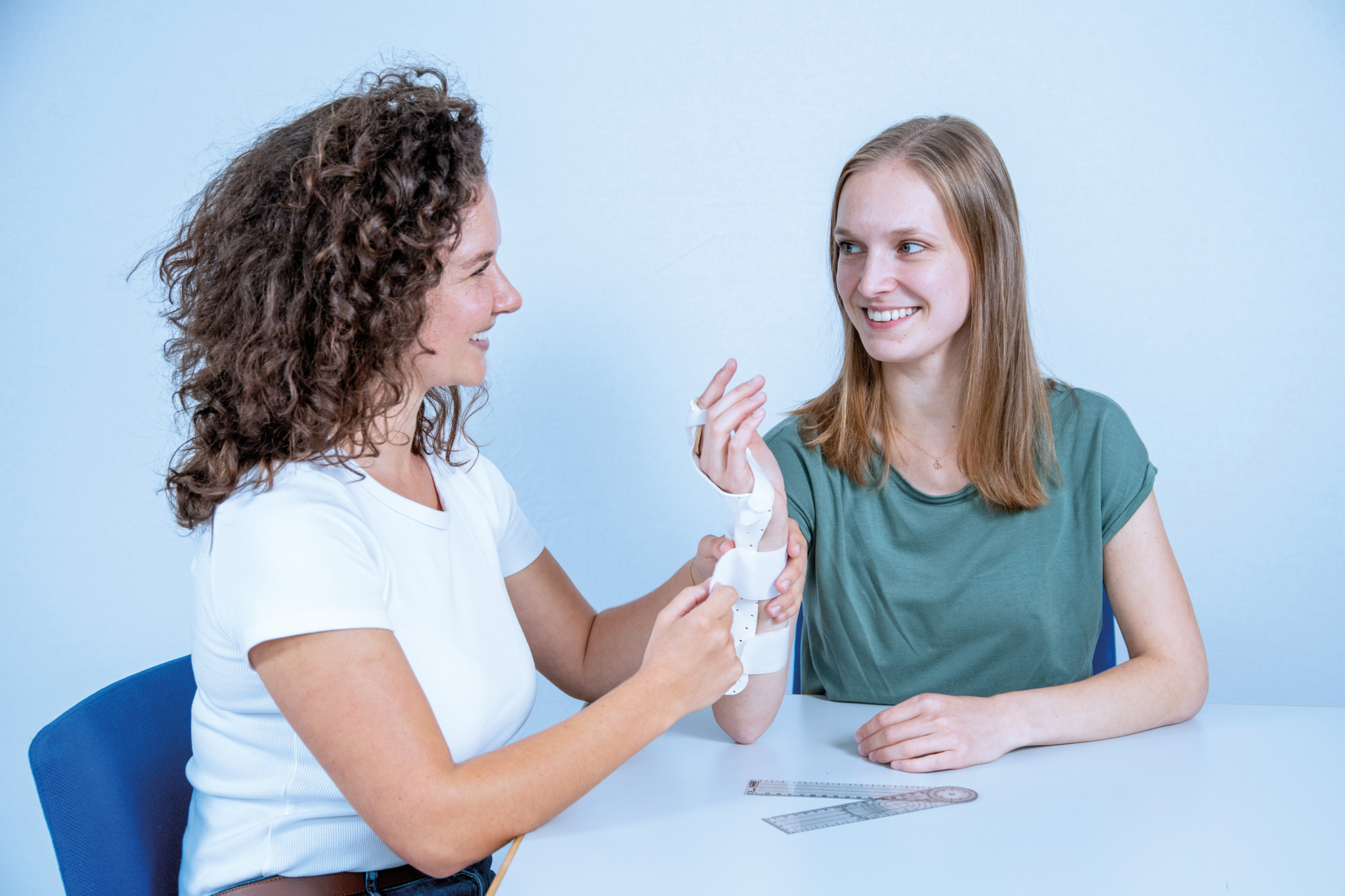
General anatomy and physiology: The student knows the morphological and functional relationships of the healthy body; is familiar with medical terminology; has basic knowledge of the development and structure of the human organism; knows the basics of physiology; explains the function of organ systems and their interaction. General pathology: The student has knowledge about the development of diseases; knows about the causes and effects of deviating cell and tissue structures and functions in the organism. Hygiene: The student knows standards of hygiene, infection prevention and epidemiology and derives prophylactic measures from these; takes the requirements of hygiene into account and recognises the importance of hygiene in the healthcare sector. Health promotion and prevention in the healthcare professions: The student explains the basic concepts of health promotion, resilience, health literacy, climate literacy, health literacy and prevention within and outside its own division; describes the importance of health-promoting measures both for themselves personally and for their clients/patients; knows the basic principle of primary care in Austria and its tasks in connection with public health and health promotion. Emergency management: The student recognises life-threatening conditions and provides the appropriate first aid; creates the basic monitoring and interprets these basic values; carries out initial measures in airway management. Legal bases 1 and healthcare: The student knows the job profiles and areas of expertise of the healthcare professions in Austria; recognises the limits of independent professional practice and makes reference to the relevant legal regulations; knows the organisational structures and political spheres of influence of the Austrian healthcare system as well as the basic principles of hospital management. Digitisation: can explain selected basic terms from the field of digitalisation in healthcare; can explain selected information systems in the healthcare sector.
- Semester:
- 1
- Type:
- Lecture compulsory course
- ECTS-points:
- 4
- Contents:
- - Basics of anatomy and physiology including terminology
- Biology of the cell, tissue types incl. functions
- Respiratory system
- Cardiovascular system
- Digestive system and metabolism
- Kidneys and urinary tract
- Skeletal system and musculoskeletal system
- Reproductive system incl. reproductive organs
- Nervous and endocrine system
- Skin and sensory organs
- Blood, immune system and lymphatic organs
- Semester:
- 1
- Type:
- Lecture compulsory course
- ECTS-points:
- 1,5
- Contents:
- - Definition, basics and tasks of pathology
- Pathogenesis and pathophysiology of diseases
- Epidemiology and prevention of diseases
- Cell growth and differentiation
- Cell and tissue damage
- Inflammatory pathology
- Immunopathology
- Basic concepts of genetics and heredity
- Systemic pathology
- Semester:
- 1
- Type:
- Lecture compulsory course
- ECTS-points:
- 0,5
- Contents:
- - Definition of digitalisation in the healthcare context
- eHealth - definition of terms and areas of application (e.g. health telematics, telemedicine ...)
- Digital interfaces in healthcare facilities (e.g. HIS, LIS, RIS2, SAP, ...)
- Current applications
- Semester:
- 1
- Type:
- Integrated course compulsory course
- ECTS-points:
- 0,5
- Contents:
- - Basics and definitions of terms
- Examples from practice (good practice)
- Importance of health promotion and prevention for healthcare professionals, for clients/patients, for the healthcare system, for the economy.
- International and national developments in health promotion and health policy (nutrition, exercise, substance abuse such as alcohol, nicotine, drugs, ...)
- Age and gender aspects and forms of communication in health promotion
- Semester:
- 1
- Type:
- Lecture compulsory course
- ECTS-points:
- 0,5
- Contents:
- -Rough concept for hospital hygiene
- Basic concepts of epidemiology/pathogen types/infectiology/disinfection/sterilisation
- Disposal in the hospital
- Hand hygiene and personal hygiene
- Immunisation
- Healthcare Associated Infections
- Semester:
- 1
- Type:
- Integrated course compulsory course
- ECTS-points:
- 0,5
- Contents:
- - Basic Life Support (BLS) based on the European Resuscitation Council (ERC) Guidelines 2021
- Aspiration events/bolus events with special attention to the management of the airway
- Paediatric emergencies
- xABCDE scheme
- Customer Relationship Management (CRM) Guidelines
- Basic monitoring
- Alerting the cardiac alarm team or MET team (algorithm)
- Sim training with feedback (see CAS model)
- Practical exercises in small groups
- Reflection models/methods after stressful events
- Semester:
- 1
- Type:
- Lecture compulsory course
- ECTS-points:
- 1
- Contents:
- - Job profiles and areas of expertise in the healthcare sector
•Pharmacist: Pharmacy Act
•Physician: Medical Act
•Higher medical-technical service: Medical-Technical Services Act (biomedical analyst, dietician, occupational therapist, speech therapist, orthoptist, physiotherapist, radiological technologist)
•Healthcare and Nursing: Healthcare and Nursing Act (Higher Service for Healthcare and Nursing, Nursing Assistant, Nursing Assistant)
•Midwife: Midwifery Act
•Cardiotechnician: Cardiotechnician Act
•Masseur: Medical Masseur and Therapeutic Massage Act
•Medical assistant professions: Medical Assistance Professions Act (disinfection assistant, plaster casts assistant, laboratory assistant, autopsy assistant, operating theatre assistant, surgery assistant, X-ray assistant, training therapist, sports scientist, new: surgical assistant)
•Musictherapist: Music Therapy Act
•Psychologist: Psychology law
•Psychotherapist: Psychotherapy Act
•Rescue and ambulance service: Paramedics Act
•Dentist, dental assistant and prophylaxis assistant: Dentists Act
- Austrian healthcare system and basic principles of hospital management
•Organisation of authorities and distribution of tasks in Austria:
relationship between federal government - provinces - district administration - social insurance
•Health structure plan
•Austrian social security system: health, accident and pension insurance
•Excursus:
•Tax-financed model, e.g. Great Britain, NHS or private insurance system, e.g. USA - "Obamacare"
•Fundamentals and models of hospital financing: LKF model and DRG model
•Operational and strategic controlling Key figures: Case numbers, bed utilisation, patient flows, recording of services, ...
Basics of quality and data management: The student explains the basics of data and quality management in the healthcare sector; analyses and applies documentation standards in the various settings, reflects on them and supports quality-related activities (e.g. interface management, quality reporting, outcome quality measurement). Legal basis 2: The student knows and understands the basic principles of the legal foundations and laws specific to the profession; knows and understands the relevant job-specific aspects of data security. Family and patient education: The student knows the basics of professional information and counselling sessions; recognises the importance of a basis of trust with clients/patients and their relatives; knows the relevant professional laws and the competences and responsibilities they contain. Digital healthcare and teletherapeutic concepts: The student recognises the potential applications of digital healthcare and teletherapeutic concepts; analyses the digital treatment concepts in the context of digital transformation; understands initiating change processes; develops a reflective attitude.
- Semester:
- 3
- Type:
- Lecture compulsory course
- ECTS-points:
- 0,5
- Contents:
- - Definitions of terms (eHealth, telemedicine, telehealth, digital health)
- General
• Megatrends and challenges in the healthcare sector
• Telemedicine: Framework conditions in Austria/Germany
• Systems, technical framework conditions
• Goals, benefits and opportunities as well as challenges, obstacles and limitations
• Quality assurance
• Legal basis
• Examples from practice
• Teletherapy concepts
• Strategies e.g. televisits, examples of implementation
• Examples of digital health projects (e.g. in the GGZ geriatric health centre in Graz, interactive training systems, ...)
- Methods and applications of digital healthcare, e.g:
• Assissitive technologies
• Digital health applications (DIGAS)
• Digital care applications (DiPA)
• Mobile health applications (apps)
• Wearables (fitness watches, etc.)
• Gamification
• AR/VR systems,
• Robotics
• Smart Health/ Home
• Web-based platforms (for HP)
• Artificial Intelligence (AI), Artificial Intelligence (AI)
• Movement laboratory, ...
- Semester:
- 3
- Type:
- Lecture compulsory course
- ECTS-points:
- 0,5
- Contents:
- - Framework conditions for patient education
- Legal framework (professional laws, competences, responsibilities)
- Concepts of health promotion/health education and its connection with family and patient education
(Salutogenetic model according to Antonovsky, empowerment, model of behavioural change e.g. according to Prohaska and DiClemente, the terms health literacy/health promotion/prevention)
- Terms family, psycho- and patient education with the methods of patient education (information, training, counselling, moderation)
- Goals of client/patient and family education (compliance, adherence, consulting, counselling)
- Phases of the education process
- Use of aids for client/patient and family education (evaluation of brochures, information materials, videos, ... using the Witten list or the SAM evaluation scheme; dealing with sources)
- Information transfer
- Prerequisites and framework conditions for successful educational processes (target group orientation, proximity/distance, challenges such as the influence of stressful situations/knowledge/language/cultural barriers, ...)
- Semester:
- 3
- Type:
- Lecture compulsory course
- ECTS-points:
- 1
- Contents:
- - Basics of data management
- Basics and terms of quality management
- Quality assurance and development measures
- Application of digitalisation concepts in the healthcare sector on the basis of legal framework conditions
- Semester:
- 3
- Type:
- Lecture compulsory course
- ECTS-points:
- 0,5
- Contents:
- - Professionspecific legal principles and laws
• Liability (criminal liability, civil liability)
• Patient rights, exemplary (patient charter, e.g. Upper Austria, adult protection law, living will law, dying will law)
• Special regulations relevant to the profession (hospital law, e.g. hospital hygiene based on §8a KAKuG, medical device law, pharmaceutical law, accommodation law, right to stay in a nursing home, ...)
- Data protection and security
• Art 1 DSG: Fundamental right to data protection
• GDPR: relevant provisions
• Professional rights (right to confidentiality and data protection, explicit consent, handling of personal data, duty of confidentiality)
The student knows the basics of functional movement theory; knows how the biomechanical aspects work and can recognise and analyse them in the context of activity; observes and differentiates between the interpretation and evaluation of movement sequences during activities; can carry out activity and movement analyses; can provide an overview of the biomechanical, motor, sensory-perceptual, cognitive and psychosocial competences of clients/patients; recognises the interrelationship between environment and material in relation to the performance of an activity/occupation; carries out modifications/grading of activities.
- Semester:
- 1
- Type:
- Integrated course compulsory course
- ECTS-points:
- 1,5
- Contents:
- - Analysis of activities, environment and material
- Criteria of occupational performance, oberservation, interpretation and evaluation
- Assessment of the activity requirements
- Modification and graduation of activities
- Semester:
- 1
- Type:
- Integrated course compulsory course
- ECTS-points:
- 1,5
- Contents:
- - Biomechanics of movement
- Movement analyses
- Assessing criteria
- Physiological posture and movement, observation vs. interpretation
The student has developed initial approaches to professional identity, understands the role of the occupational therapist and as an enabler of activities/occupations; is familiar with the basics of occupational therapy and has developed a occupational therapy understanding of human agency; has learnt the basics of professional ethics and can take into account cultural and religious needs, lifestyles and values and appreciate and respect their influence on the ability to perform and participate; recognises how occupation influences health and well-being and how this knowledge can be used in everyday (professional) life and forms the basis for identity development; develops a professional identity as part of the healthcare system; presents occupational therapy and is orientated towards the target group.
- Semester:
- 1
- Type:
- Integrated course compulsory course
- ECTS-points:
- 1,5
- Contents:
- - Occupational therapy in a national and international context
- Development of occupational therapy
- Basics terminology of occupational therapy (incl. occupational science)
- Professional profile (incl. legal basics) and current and future working fields.
- Occupational therapy competences
- Regional, national and international professional associations
- Ethics in the professional field
- Semester:
- 1
- Type:
- Integrated course compulsory course
- ECTS-points:
- 1,5
- Contents:
- - Time Use and Occupational Balance
- Coping with the demands of occupational therapy practice, strengthening resources (salutogenetic model)
- Quality of life, Occupational Wellbeing
- Lifestyle and life style redesign
- Health literacy and health behaviour incl. self-care
- Occupational therapy in the field of public health (health promotion, prevention)
- Role of health advocates (operational justice)
- Semester:
- 1
- Type:
- Integrated course compulsory course
- ECTS-points:
- 1
- Contents:
- - Identity development (personal/professional)
- Presentation techniques (visual/verbal/written/formal)
- Presentation and conversation focused on target group
- Roles and understanding of roles
The student recognises the potential of occupation; understands the importance of occupational performance as a basic concept of occupational therapy; creates occupational profiles of people in different phases of life and life situations; observes and analyses selected client/patient factors and performance skills; assesses the patient's biomechanical, motor, sensory-perceptual, cognitive and psychosocial competences (MTD AV); knows the basic forms of professional reasoning; knows and recognises the steps of the occupational therapy process; knows occupational therapy documentation options and applies selected ones; knows the professional legal basis for the implementation of the occupational therapy process (e.g. competence profile, ethical mission statement, obligation of secrecy); performs selected manual techniques and recognises their potential in the occupational therapy process; understands the role of the occupational therapist as an expert in occupation; integrates the dimensions of sustainability into occupational therapy thinking and action.
- Semester:
- 1
- Type:
- Integrated course compulsory course
- ECTS-points:
- 4,5
- Contents:
- - Occupational therapy process based on the Occupational Therapy Practice Framework (OTPF)
- Occupation profile
- Analysis of occupational performance, using assessing tools (e.g. Activity Card Sort, COSA/OSA, OPHI-II, BIDOC, PEAP, IPA, PEM-CY, COPM)
- Observation and interpretation of occupational performance incl. intervention, professional reasoning, goalsetting, documentation, knowledge of quality assurance
- Craft as a means and medium in the occupational therapy process
- Professional legal basis
- Semester:
- 1
- Type:
- Integrated course compulsory course
- ECTS-points:
- 4,5
- Contents:
- - Elements of occupational performance (person - occupation - environment) and their interaction
- Activity/occupation
- Taxonomy and dimensions of occupation (doing, being, becoming, belonging)
- Meaning of occupation, relevant references from the occupation sciences
- Self-efficacy, agency, spirituality, identity, commitment, independence, participation
- Activities of everyday life in different phases of life, incl. analysis of transitions - occupaitonal profiles in different life situations
- Occupational therapy models and frameworks
- Craft as a meaningful occupation and self-experience
- Dimensions of sustainability
The student knows occupational therapy-relevant diagnostic instruments and applies selected occupational therapy diagnostic instruments; collects and analyses information with a focus on occupational performance, sets occupational therapy goals and priorities in a client/patient-centred manner and creates an intervention plan; knows evidence-based occupational therapy interventions and carries out selected interventions in practice; addresses activities, performance skills and performance patterns, contexts and environments and client/patient factors with the selected interventions and ensures the transfer of these into everyday life; reflects on the progress of the interventions and adapts or graduates them if necessary; understands the difference between top-down and bottom-up approaches and recognises in which situations which approach makes sense; documents the treatment process, analyses and evaluates the results.
- Semester:
- 2
- Type:
- Integrated course compulsory course
- ECTS-points:
- 2
- Contents:
- - Occupational therapy-relevant diagnostic tools and structured observation in the context of occupation
- Skills analysis
- Analysing client/patient information, individual skills
- Clientcentred priorities
- Occupational therapy goal setting, occupational therapy intervention planning, documentation
- Semester:
- 2
- Type:
- Integrated course compulsory course
- ECTS-points:
- 3
- Contents:
- - Intervention approaches in individual and group settings: to promote, establish/restore, maintain, modify skills (functional exercises; simulated, adaptive, practicing activity; activity-orientated training measures; assistive devices; environmental design)
- Intervention process:
• Intervention plan
• Intervention implementation: Evidence-based interventions in relation to performance skills (motor, process-related and social interaction training)
• Intervention review: adapting the process (adapting and graduating)
• Documentation (e.g. according to SOAP, ICF)
• Check transfer to everyday life and outcome
The student gains an awareness of the cultural, virtual and personal context as well as the social and physical environment and understands their impact on performance; recognises the physical and social environment, knows approaches to adaptation using the example of selected vulnerable groups and derives implications for occupational therapy practice; can support the occupational performance or social participation of clients/patients or groups, taking into account the environmental or contextual factors; has the basic knowledge to understand the interactions between climate and health.
- Semester:
- 2
- Type:
- Integrated course compulsory course
- ECTS-points:
- 0,75
- Contents:
- - Influence of the physical environment on individuals and groups and their participation in activities
- Barriers and accessibility (incl. virtual context)
- Assessment of the environment
- Approaches to environmental adaptation
- Semester:
- 2
- Type:
- Integrated course compulsory course
- ECTS-points:
- 1,25
- Contents:
- - Human, a social being, socialisation, individuality, identity, social roles
- Society, communities, vulnerable groups, reference groups
- Occupational justice, equality of health opportunities
- Empowerment
- Diversity and culturally and gender-sensitive behaviour in occupational therapy
The student knows the basic concepts of psychology, didactics and education, takes these into account when interacting with clients/patients and establishes interdisciplinary connections; recognises the influence of cognitive and emotional processes on occupational performance; utilises selected psychological, didactic and educational findings for social communicative action; has an insight into selected psychological test procedures relevant to occupational therapy; supports teaching and learning processes from an individual point of view.
- Semester:
- 2
- Type:
- Integrated course compulsory course
- ECTS-points:
- 1
- Contents:
- - Introduction to didactic principles and basic concepts
- Scientific basis of teaching and learning theories
- Examination of theories and concepts of individual and institutional learning processes, background of current social developments
- Basics of training and group training
- Analysing the fields of practice in occupational therapy
- Semester:
- 2
- Type:
- Integrated course compulsory course
- ECTS-points:
- 1
- Contents:
- - Structured observation of occupation with a focus on emotion and cognition
- Recognising problems and resources on an emotional and cognitive level to assess occupational performance
- Conceptualisation of individual and group occupational therapy settings
- Learning and teaching in occupational therapy (e.g. Cognitive Apprenticeship or Chaining)
- Selected assessments
- Semester:
- 2
- Type:
- Integrated course compulsory course
- ECTS-points:
- 1
- Contents:
- - Importance of psychology as a reference science for occupational therapy
- Introduction to psychology: Psychologists as experts of the soul
- Psychological diagnostics and practice
- Sensory processes
- Consciousness and change of consciousness
- Memory and learning
- Cognitive processes
- Emotion and motivation
- General laws from the fields of perception, attention, memory, learning, thinking, problem solving, language, emotion, motivation, consciousness
- Action control, psychomotor skills, intelligence, stress
The student knows the structured procedure of palpation techniques based on the topography of the joint structures and muscles and the vascular and nervous system and differentiates relevant structures in terms of quality and mobility; has an overview of the basics of physical medicine and rehabilitation in the various fields; covers the relevant clinical pictures of internal medicine, including rheumatology, and integrates this knowledge into the advanced subjects; has an overview of the indications, fields of work, objectives and terminology in surgery; has an overview of the structure and function of the nervous system and integrates this knowledge in a constructive manner.
- Semester:
- 2
- Type:
- Integrated course compulsory course
- ECTS-points:
- 1,5
- Contents:
- - Classification of visible and palpable structures of the head, trunk and extremities with regard to occupational therapy examination and treatment
- Topography of bones, joints, muscles, vessels and nerves
- Palpation of selected structures on the human body including differentiation and assessment of the structures relevant for examination and treatment
- Semester:
- 2
- Type:
- Lecture compulsory course
- ECTS-points:
- 1,5
- Contents:
- - Cause, clinic, diagnostics, therapy, rehabilitation and prognosis of the clinical pictures relevant for occupational therapy
- Basics and nomenclature of internal medicine (incl. rheumatology) and surgery
- Semester:
- 2
- Type:
- Lecture compulsory course
- ECTS-points:
- 2
- Contents:
- - Neuroanatomical and neurophysiological basics
- Organisation and basic structures of the nervous system
- Structure and function of the brain and cranial nerves, spinal cord, reflex arches, ascending and descending tracts, spinal nerves, peripheral nervous system
- Task and function of the autonomic nervous system
- Sensory physiology
- Semester:
- 2
- Type:
- Integrated course compulsory course
- ECTS-points:
- 1
- Contents:
- - Basics of physical medicine and rehabilitation
- Use and effects of physical measures in the areas of prevention, prophylaxis and diagnostics
- Therapy and rehabilitation for the treatment of all organ systems including the musculoskeletal system, taking functional relationships into account
The student carries out the first concrete treatment approaches in the various fields of profession (e.g. positioning, wheelchair transfers, change of position, basal stimulation, sensory integration approaches, Affolter, Sonderegger); acquires knowledge independently and critically; knows common tools and uses them; makes appropriate contact with clients/patients (verbal, non-verbal) and maintains this contact; recognises the verbal and non-verbal needs of clients/patients and acts in an empathic and client/patient-centred manner; applies perceptual principles to severely perceptually impaired clients/patients and has a positive effect on their attention; enables initial actions through perception-enhancing measures.
- Semester:
- 2
- Type:
- Integrated course compulsory course
- ECTS-points:
- 1
- Contents:
- - Training implementions of the basic principles from BGE2I
- Semester:
- 2
- Type:
- Integrated course compulsory course
- ECTS-points:
- 1
- Contents:
- - Basics of making contact (non-verbal, verbal)
- Basics of assessment (e.g. FIM, Barthel, ICF)
- Basics of wheelchair transfers, positioning and position changes
- Basics of perception (e.g. sensory integration, basal stimulation, Affolter, Sonderegger)
- Basics of activities of daily living (ADL) and assistive technology
The student understands the basics of splint fitting and produces selected splints in practice; carries out selected craft techniques; carries out craftrelated material, activity and skills analysis
- Semester:
- 3
- Type:
- Integrated course compulsory course
- ECTS-points:
- 1
- Contents:
- - Self-experience and reflection on selected craft techniques
- Learning, practising, planning, practically implementing and analysing craft techniques
- Developing craftvariation regarding occupational performance skills
- Instruction skills according to the target group
- Semester:
- 3
- Type:
- Integrated course compulsory course
- ECTS-points:
- 1
- Contents:
- - Basics of splinting, indications for adaptation, consideration of anatomical functional conditions
- Production of selected splints an using different material
The student knows relevant relevant diagnosis and their main symptoms from the field of surgery and orthopaedics; records the client's/patient's health problem and resources, recognises the information relevant to occupational therapy and, if necessary, consults with the responsible medical practitioner or other responsible persons about missing relevant information; collects and analyses information with a focus on occupational performance, sets occupational therapy goals and priorities in a client-centred manner and draws up an intervention plan; makes interprofessional considerations with regard to participation; discusses the intervention plan with the client/patient or their relatives/associates in a manner appropriate to the target group, adapts it to individual needs and motivates them to cooperate and collaborate; addresses and implements activities, performance skills and performance patterns, contexts and environments and client/patient factors with the selected interventions and ensures the transfer of these into everyday life.
- Semester:
- 3
- Type:
- Integrated course compulsory course
- ECTS-points:
- 3,5
- Contents:
- - The occupational therapy process in the field of "traumatology, orthopaedics and rheumatology" with a focus on diagnosis, intervention planning, intervention implementation, evaluation, reflection and documentation.
- Use and graduation of functional exercises, simulated, adaptive, rehearsing and restorative activity, activity-orientated training programms
- Assistive device and environmental design
- Transferring performance skills to the everyday lives of clients/patients
- Research and application of external evidence
- Professional reasoning (diagnostic, conditional)
- Semester:
- 3
- Type:
- Lecture compulsory course
- ECTS-points:
- 2
- Contents:
- - Basics of traumatology and orthopaedics (incl. orthopaedic rheumatology): Cause, clinic and diagnostics incl. red flags
- Conservative and surgical therapy and rehabilitation of selected occupational therapy-relevant injuries and illnesses in the musculoskeletal area
The student knows relevant diagnosis and their main symptoms from the field of neurology, records the client's/patient's health problem and resources, recognises the information relevant to occupational therapy and, if necessary, consults with the responsible medical practitioner or other responsible persons about missing relevant information; applies the knowledge already acquired to specific cases in the field of "Diseases and injuries of the nervous system"; collects and analyses information with a focus on occupational performance, sets occupational therapy goals and priorities in a client-centred manner and draws up an intervention plan; discusses the intervention plan with the clients/patients and/or their relatives/associates appropriate to the target group, adapts it to individual needs and motivates them to cooperate and collaborate; addresses and implements activities, performance skills and performance patterns, contexts and environments and client/patient factors with the selected interventions and ensures the transfer of these into everyday life; reflects on the progress of the interventions and adapts or graduates them if necessary; researches current, international scientific findings and utilises these for the occupational therapy process; applies selected steps of the occupational therapy process theoretically and/or practically in the field of action "Diseases and injuries of the nervous system".
- Semester:
- 3
- Type:
- Integrated course compulsory course
- ECTS-points:
- 3,5
- Contents:
- - Occupational therapy process in the field of neurology in prevention, habilitation and rehabilitation
- Professional reasoning, development, evaluation and quality assurance of occupational therapy, according to current literature and research-relevant topics
- The role of the occupational therapist in the interdisciplinary team
- Selected steps of the occupational therapy process are practised theoretically and practically within the neurological and neuropsychological frame of reference based on professional reasoning, ICF and occupational therapy models and concepts
- Semester:
- 3
- Type:
- Lecture compulsory course
- ECTS-points:
- 2
- Contents:
- - Basics of neurology and neuropsychology
- Cause, clinic, diagnostics, therapy, rehabilitation and prognosis of selected neurological diseases such as cerebral masses and diseases, central movement disorders, diseases of the spinal cord, peripheral diseases, degenerative and inflammatory diseases, traumatic damage to the brain/spinal cord including severe acquired brain damage, neuromuscular diseases
- Areas of responsibility and basics of neuropsychological diagnostics, therapy and training for neuropsychological disorders
The student records the client's/patient's health problem and resources, recognises the information relevant to occupational therapy and, if necessary, consults with the responsible medical practitioner or other responsible persons about missing relevant information; applies the knowledge already acquired to specific cases in the field of "people of advanced age"; collects and analyses information with a focus on occupational performance, sets occupational therapy goals and priorities in a client-centred manner and draws up an intervention plan; makes interprofessional considerations with regard to participation; discusses the intervention plan with the clients/patients and/or their relatives/associates appropriate to the target group, adapts it to individual needs and motivates them to cooperate and collaborate; addresses and implements activities, performance skills and performance patterns, contexts and environments and client/patient factors with the selected interventions and ensures the transfer of these into everyday life; reflects on the progress of the interventions and adapts or graduates them if necessary; researches current, international scientific findings and utilises these for the occupational therapy process; applies selected steps of the occupational therapy process theoretically and/or practically in the field of "people of advanced age".
- Semester:
- 4
- Type:
- Integrated course compulsory course
- ECTS-points:
- 1
- Contents:
- - Case-related application of the occupational therapy process with older people:
• Theory and practice of the occupational therapy process
• Selected occupational therapy treatment methods and tools in individual and group settings based professional reasoning, ICF and occupational therapy models and concepts.
- Semester:
- 4
- Type:
- Integrated course compulsory course
- ECTS-points:
- 2,5
- Contents:
- - Occupational therapy process with "People of advanced age" in prevention, habilitation and rehabilitation
- Professional reasoning, development, evaluation and quality assurance of occupational therapy according to current literature and research-relevant topics
- The role of occupational therapists in the interdisciplinary team
- Theory and practice of the occupational therapy process within the geriatric frame of reference based on professional reasoning, ICF and occupational therapy models and concepts.
- Semester:
- 4
- Type:
- Lecture compulsory course
- ECTS-points:
- 2
- Contents:
- - Theories of ageing, concepts of ageing, biology and selected sociology of ageing, illness in old age (e.g. problems of multimorbidity, consequences of immobility)
- Basics of geriatric medicine, curative and palliative medicine, geriatric assessments, geriatric therapy and rehabilitation
- Causes, clinics, diagnostics, therapy, rehabilitation and prognosis of selected ilnesses and deseases relevant to occupational therapy, which primarily affect people in old age (e.g. dementia, frailty, sarcopenia, malnutrition) including red flags
The student recognises child development; knows relevant paediatric diagnosis and their main symptoms; collects and analyses information with a focus on occupational performance, sets occupational therapy goals and priorities in a client-centred manner and draws up an intervention plan; records the client's/patient's health problem and resources, recognises the information relevant to occupational therapy and, if necessary, consults with the responsible medical practitioner or other responsible persons about missing relevant information; discusses the intervention plan with the clients/patients and/or their relatives/associates appropriate to the target group, adapts it to individual needs and motivates them to cooperate and collaborate; addresses and implements activities, performance skills and performance patterns, contexts and environments and client/patient factors with the selected interventions and ensures the transfer of these into everyday life; reflects on the progress of the interventions and adapts or graduates them if necessary; researches current, international scientific findings and utilises these for the occupational therapy process; applies selected steps of the occupational therapy process theoretically and/or practically in the field of occupational therapy with infants, children and adolescents; makes interprofessional considerations with regard to participation; applies the knowledge already acquired to specific cases in the field of paediatrics; draws up an occupational therapy report based on the results of the information recording, guided by hypotheses, using occupationspecific examination procedures (MTD AV).
- Semester:
- 4
- Type:
- Miscellaneous compulsory course
- ECTS-points:
- 3,5
- Contents:
- - The applied occupational therapy process in the fields of paediatrics, child and adolescent psychiatry:
• Evaluation: activity profile and analysis of occupational performance
• Intervention: Plan, implementation and review
• Targeting outcomes
- Disorders and disabilities
- Principle-based occupational therapy thinking in paediatrics
- Case-related application of the occupational therapy process
- Semester:
- 4
- Type:
- Lecture compulsory course
- ECTS-points:
- 2
- Contents:
- - Child development and its deviations
- Development diagnostics of the most relevant paediatric diseases
- Rehabilitation and prognosis of deseases relevant to occupational therpay in infancy, childhood and adolescence such as congenital and genetic diseases, sensory disabilities, cerebral developmental disorders
- Red Flags
- Child and adolescent psychiatric disorders
The student knows relevant diagnosis and their main symptoms from the fields of psychiatry and psychotherapy; records the client's/patient's health problem and resources, recognises the information relevant to occupational therapy and, if necessary, consults with the responsible medical practitioner or other responsible persons about missing relevant information; collects and analyses information with a focus on occupational performance, sets occupational therapy goals and priorities in a client-centred manner and draws up an intervention plan; makes interprofessional considerations with regard to participation; discusses the intervention plan with the clients/patients and/or their relatives/associates appropriate to the target group, adapts it to individual needs and motivates them to cooperate and collaborate; addresses and implements activities, performance skills and performance patterns, contexts and environments and client/patient factors with the selected interventions and ensures the transfer of these into everyday life; reflects on the progress of the interventions and adapts or graduates them if necessary; researches current, international scientific findings and utilises these for the occupational therapy process; applies selected steps of the occupational therapy process theoretically and/or practically in the field of psychiatry and psychotherapy; applies the knowledge already acquired to specific cases in the field of psychiatry and psychotherapy.
- Semester:
- 4
- Type:
- Integrated course compulsory course
- ECTS-points:
- 3,5
- Contents:
- - Applied models in occupational therapy and the occupational therapy process in the field of psychiatry and psychotherapy in different settings and phases
- The role of the occupational therapist in the interdisciplinary team
- Professional reasoning, development, evaluation and quality assurance of occupational therapy, taking into account medical and occupational therapy guidelines and evidence
- Semester:
- 4
- Type:
- Lecture compulsory course
- ECTS-points:
- 2
- Contents:
- - Basics from all areas/disciplines of psychiatry and psychotherapy
- Symptoms, causes, clinic, diagnostics, therapy, rehabilitation incl. red flags
- Consolidation of occupational therapy-relevant approaches and measures
The student is familiar with technology-based assessments and interventions and their use in the occupational therapy process; selects technology-based support options on a case-by-case basis, taking into account context, environment and personal factors; develops technology-based solutions for people with disabilities in terms of occupational performance and participation.
- Semester:
- 4
- Type:
- Integrated course compulsory course
- ECTS-points:
- 2
- Contents:
- - Practical implementation of telerehabilitation
- Deepened examination of selected technology-based interventions
- Development of an occupational therapy-relevant application
- Semester:
- 4
- Type:
- Integrated course compulsory course
- ECTS-points:
- 2
- Contents:
- - Telerehabilitation and telemedicine
- Virtual reality/augmented reality and Upper Extremity Lab
- Digital therapeutics
- Robotics, exoskeletons
- Prosthetics
- Brain Computer Interface (BCI)
- Ambient Assisted Living
- Virtual support in the healthcare sector
- Rehabilitation technologies
- Accessibility
- Information and communication technologies
- Digital assessments and documentation
- Practice management software
The student carries out the occupational therapy process on a case-by-case basis in selected fields; communicates appropriately to the target group; reflects on the use of the various manual techniques and carries out individual graduations/modifications in both individual and group settings; acts professionally in cooperation with all relevant participants/stakeholders, taking into account the wishes and needs of clients/patients and promoting occupation with a view to health and well-being as well as participation; applies interprofessional considerations to participation.
- Semester:
- 4
- Type:
- Integrated course compulsory course
- ECTS-points:
- 2
- Contents:
- - Observation and interpretation of the occupational performance skills
- Evaluation: occupational profile and analysis of occupational performance
- Intervention: goal identification, plan, implementation and review
- Documentation
- Targeting outcomes
- Tools for counselling and conversation in challenging situations
- Semester:
- 4
- Type:
- Integrated course compulsory course
- ECTS-points:
- 1
- Contents:
- - Graduation/modification of craft techniques
- Analysing material, technique and product
- Using crafts in individual and group settings
- Deepening the activity and occupational performance skills
The student analyses communities with regard to occupational justice and participation in public life; identifies networks in the community setting with the aim of enabling clients/patients to act and participate; plans projects in a municipal setting; develops a professional ethical attitude that guides his/her actions in a social and communal context; develops concepts according to professional, economic and ecological principles.
- Semester:
- 5
- Type:
- Integrated course compulsory course
- ECTS-points:
- 2
- Contents:
- - Basics of community work and their significance and possibilities in occupational therapy
- Perspectives of occupational science in living environment and communities (including occupational justice, collective ane context-related perspectives on occupation) especially vulnerable groups
- Human rights and occupational therapy - Promote Occupation as Human Right
- Socio-cultural and political conditions for activity (inclusion, participation, ...)
- Role of occupational therapy ine health and social sectors, reflection on new fields in occupational therapy
- Selected frameworks, assessments (community development framework, ...)
- National and regional framework conditions for project realisation and financing options
- Project management: basics, project definition and project environment analysis, project planning, project organisation, teamwork, communication and documentation in projects, project completion
The student knows relevant chronic diseases and their main symptoms; records the client's/patient's health problem and resources, recognises the information relevant to occupational therapy and, if necessary, consults with the responsible medical practitioner or other responsible persons about missing relevant information; collects and analyses information with a focus on occupational performance, sets occupational therapy goals and priorities in a client/patient-centred manner and draws up an intervention plan; makes interprofessional considerations with regard to participation; discusses the intervention plan with the clients/patients and/or their relatives/associates appropriate to the target group, adapts it to individual needs and motivates them to cooperate and collaborate; addresses and implements activities, performance skills and performance patterns, contexts and environments and client/patient factors with the selected interventions and ensures the transfer of these into everyday life; reflects on the progress of the interventions and adapts or graduates them if necessary; researches current, international scientific findings and utilises them for the occupational therapy process; applies selected steps of the occupational therapy process theoretically and/or practically in the field of "occupational therapy for chronic illnesses"; acts professionally in cooperation with all relevant participants/stakeholders, takes into account the wishes and needs of clients/patients and promotes occupation with a view to health and well-being as well as participation; communicates appropriately to the target group; makes interprofessional considerations regarding participation; takes the climate resilience of vulnerable people into account in the occupational therapy process; explains how vulnerable clients/patients can reduce climate change-related health risks; identifies vulnerability factors or symptoms of clients/patients as a direct or indirect effect of weather and climate phenomena and derives treatment and prevention measures from this.
- Semester:
- 5
- Type:
- Integrated course compulsory course
- ECTS-points:
- 1
- Contents:
- - Patient education (joint protection and aid counselling, guidance on pacing, energy management)
- Self-management interventions including behavioural change, counselling sessions in various settings
- Semester:
- 5
- Type:
- Integrated course compulsory course
- ECTS-points:
- 3,5
- Contents:
- - Occupational therapy process for chronic diseases
- Educational interventaions (patient education)
• Self-management, symptom management
• Stress management
• Activity and occupational adaptation
- Counselling interventions (coaching), accompanying change processes (e.g. climate resilience)
- Semester:
- 5
- Type:
- Lecture compulsory course
- ECTS-points:
- 1
- Contents:
- - Overview of non-communicable chronic diseases (NCDs) incl. red flags
- Cardiovascular, musculoskeletal, neurodegenerative, pulmonary and (geronto-)psychiatric diseases
- Metabolic and tumour diseases
- Influence of environmental influences on symptoms (climate vulnerability)
The student knows relevant diagnosis and their main symptoms in the field of health promotion, prevention and working people; records the client's/patient's health problem and resources, recognises the information relevant to occupational therapy and, if necessary, consults with the responsible medical practitioner or other responsible persons about missing relevant information; carries out the occupational therapy process on a case-by-case basis in the field of "occupational therapy in health promotion, prevention and with working people"; acts professionally in cooperation with all relevant participants/stakeholders, taking into account the wishes and needs of clients/patients and promoting occupation with a view to health and well-being as well as participation; communicates appropriately to the target group; makes interprofessional considerations; collects and analyses information with a focus on occupational performance, sets occupational therapy goals and priorities in a client/patient-centred manner and draws up an intervention plan; discusses the intervention plan with the clients/patients and/or their relatives/associates appropriate to the target group, adapts it to individual needs and motivates them to cooperate and collaborate; addresses and implements activities, performance skills and performance patterns, contexts and environments and client/patient factors with the selected interventions and ensures the transfer of these into everyday life; reflects on the progress of the interventions and adapts or graduates them if necessary; researches current, international scientific findings and utilises these for the occupational therapy process; elaborate interventions to promote development and maintain health; applies previously acquired knowledge to specific cases in the field of "occupational therapy in health promotion, prevention and with working people"; focuses specifically on gender- and age-appropriate health promotion and on teaching or improving health literacy; coordinates the respective therapy plan with clients/patients, stakeholders and clients; has knowledge of injuries and preventive measures in the field of occupational medicine, occupational psychology and occupational integration and their effects on occupation and participation; knows the conditions for health and illness and can identify personal, behavioural and relationship-related factors as conditions for health; works according to professional, economic and ecological principles; uses the occupational therapy process efficiently to maintain, promote, improve or regain the individual's ability to act in health promotion, prevention, therapy and rehabilitation; develops a professional ethical attitude that guides his/her actions in the medical and social context; plans a project and implements it; represents own decisions externally within the scope of project management.
- Semester:
- 5
- Type:
- Integrated course compulsory course
- ECTS-points:
- 3,5
- Contents:
- - Occupational therapy process in the field of "Health promotion, prevention and with working people"
- Professional reasoning, development, evaluation and quality assurance of occupational therapy according to current literature and research-relevant topics
- The role of an occupational therapist in an interdisciplinary team
- Productivity, activities outside the traditional work setting
- Project-related work
- Project development with peer feedback
- Presentation techniques
- Development of the role as an occupational therapist in health promotion, prevention and with working people
- Determination and presentation of skill profiles and requirement profiles (e.g. MELBA)
- Social skills training in groups (e.g. GSK)
- Focus on health promotion and prevention as well as the working person (e.g. disease-related/diagnosis-specific reasoning incl. interprofessional work)
- Basics of body awareness, biomechanics, spiral dynamics
- Ergonomics
- Occupational medicine
- Semester:
- 5
- Type:
- Integrated course compulsory course
- ECTS-points:
- 1
- Contents:
- - Laws and regulation on employee Protection (ASchG), Screen Work, legal data use (GSGV), occupational science and occupational psychology principles with a focus on digitalisation and older employees
- Injuries and preventive interventions in the field of occupational medicine, occupational psychology and occupational integration and their effects
- Organisational framework conditions
- Ergonomic workplace design, environmental design
- Assessments and measurement methods in ergonomics and health promotion
- Analysis of working posture, relief exercises
- Mental stress, stress management, break management
- Models for behavioural change
- Counselling and coaching tools
- Red Flags
The student transfers all steps of the occupational therapy process adapted to possible (new) fields in occupational therapy and works together in an interprofessional team; takes into account the requirements of quality management; develops and designs the professional practice, in particular freelance professional practice, using organisational and business management principles and implements these accordingly; demonstrates a strong professional identity and ensures the quality of professional practice (professional attitude); works professionally with individuals and groups; works according to professional, economic and ecological principles; recognises options for action with regard to climate change adaptation and develops ideas for their implementation; has acquired a basic understanding of public health, health promotion and health literacy and can relate this to their own professional activities.
- Semester:
- 6
- Type:
- Seminar compulsory course
- ECTS-points:
- 2
- Contents:
- - Occupational Science
- Professional, political reasoning
- Professional, strategic reasoning
- Sustainable Development Goals
- Migration and health
- Primary care
- Semester:
- 6
- Type:
- Seminar compulsory course
- ECTS-points:
- 2,5
- Contents:
- - Key competences for entrepreneurship in occupational therapy
- Tools for developing innovative thinking
- Ethical considerations in connection with innovation and entrepreneurship
- Further development of occupational therapy in different settings and roles
Optional:
• Practical project in new work fields
• Realisation of a project from the 5th semester (Community Based Inclusive Development)
• Project proposal concerning health promotion and entrepreneurship (e.g. to submit an interprofessional project)
• Publication
- Semester:
- 6
- Type:
- Practice-oriented session compulsory course
- ECTS-points:
- 1
- Contents:
- Students can collect the necessary credit points for this course individually during their degree programme:
- Participation in extracurricular-facultative courses of the own study programme
- Participation in extracurricular courses offered by the department or the university (open lectures)
- Participation in selected congresses, conferences and training courses
The student recognises different types of behaviour and reflects on them in a professional context; can communicate appropriately with their counterpart; designs and reflects on communicative and interactive processes in heterogeneous, diverse and interprofessional groups; interprets and reflects on what has been learnt, describes it to an appropriate extent and applies or accepts feedback and feed-forward concretely and actively; can independently reflect on professional actions and explain them to others in an understandable and precise manner.
- Semester:
- 1
- Type:
- Integrated course compulsory course
- ECTS-points:
- 1
- Contents:
- Communication theories
- 4 Theoretical models (transmitter-receiver model,
Watzlawick, Schultz von Thun, ...)
- Verbal/non-verbal communication
- Conversation techniques
- Self-perception and perception of others
Communication
- Apply dialogue techniques
- Successful/unsuccessful communication
- Self-perception and perception of others
- Principles of targeted dialogue
Diversity
- Definition
- Dimensions (age, gender, abilities, ...)
- Implications for studying and working
Ethics
- Basic concepts
- Goals and tasks
- Classical ethical theories
- Normative and descriptive ethics
- Deontological and teleological theories of ethics
- Applied ethics in healthcare
- Principles of ethics (autonomy, non-harm, care, justice)
The student examines their own values and reflects on these values in relation to client/patient contact; reflects the personality and values of clients/patients; knows the basics of building a therapeutic relationship with clients/patients and reflects on these in a practical context; knows their own mental hygiene strategies and reflects on their practical application; carries out hygiene measures relevant to occupational therapy practice; is familiar with requirements and guidelines relevant to occupational therapy practice (e.g. DSGVO); reflects on their own role (use of self) in a practical context; reflects on activity profiles, situation analyses and the resulting activity topics, activity goals and approaches to measures for achieving goals.
- Semester:
- 1
- Type:
- Integrated course compulsory course
- ECTS-points:
- 1,5
- Contents:
- - Organisation and documentation of the internship
- Preparation, support and reflection on placement 1
- Reflection on your own role(s) as a future occupational therapist or student
- Reflection on the Use of Self for professional and personal development
- Case monitoring (reflection and professional reasoning)
- Hygiene in practice
- Semester:
- 1
- Type:
- Integrated course compulsory course
- ECTS-points:
- 1,5
- Contents:
- - Programme-specific focus on teamwork, cooperation and team building
- Self-reflection and feedback in relation to the role as a future occupational therapist
- Values and attitude in the occupational therapy setting
- Motivation and motivation theories in occupational therapy practice
- Lifelong learning in the therapeutic setting
The student shows professional identity; recognises own competencies and uses them professionally; drives its own professional development; presents content relevant to occupational therapy in a way that is appropriate for the target group.
- Semester:
- 5
- Type:
- Integrated course compulsory course
- ECTS-points:
- 1,5
- Contents:
- - Self-learning skills (lifelong learning - LLL)
- Professional identity
- Personal development
- Individual health competence
- Role of teacher
- Preparing occupational therapy content for specific target groups
The student knows the tasks and requirements of the student's role in the placement and can fulfil these independently; reflects the role of occupational therapist (use of self, building a therapeutic relationship, compliance with guidelines and directives, ...) in a practical context; reflects the personality and values of clients/patients; reflects on occupational profiles, analyses situations resulting in occupational goals, approaches for achieving goals, taking into account client/patient and context factors in a concrete practical context, reflects on the application of their own mental hygiene strategies in a practical context.
- Semester:
- 2
- Type:
- Integrated course compulsory course
- ECTS-points:
- 1,5
- Contents:
- - Organisation and documentation of the internship
- Preparation, support and reflection of placement 2 and 3
- Reflection on your own role(s) as a prospective occupational therapist or student
- Deepening contact and conversation, therapeutic relationship
- Reflection on the Use of Self for professional and personal development
- Case monitoring (reflection and professional reasoning)
The student recognises own competencies and uses them professionally; reflects on their own personal and social skills, such as empathy, communication, criticism, conflict, reflection and teamwork skills; reflects on their own role as an occupational therapist in training (with clients/patients, instructors, in the occupational therapy team, in the interprofessional team, ...); reflects the personality and values of clients/patients; reflects on occupational profiles, analyses situations resulting in occupational goals, approaches for achieving goals, taking into account client/patient and contextual factors in a concrete practical context; reflects on the application of their own mental hygiene strategies in a practical context; assesses his/her own abilities to technical, organisational, coordinating and administrative professional requirements.
- Semester:
- 3
- Type:
- Integrated course compulsory course
- ECTS-points:
- 5
- Contents:
- - Supportive reflection processes to clarify and stabilise professional identity
- Organisation of reflection processes in the sense of Reflection on Action
- Reflection and evaluation of experiences in the various internship fields and the workplace University of Applied Sciences
- Case studies and problem solving in occupational therapy practice
The student recognises own competencies and uses them professionally; uses their own personal and social skills such as empathy, communication, criticism, conflict, reflection and teamwork skills in practical sequences; reflects on their own actions in their role as an occupational therapist in training (with clients/patients, instructors, in the occupational therapy team, in the interprofessional team, ...); reflects the personality and values of clients/patients; reflects on occupational profiles, analyses situations resulting in occupational goals, approaches for achieving goals, taking into account client/patient and contextual factors in a concrete practical context.
- Semester:
- 4
- Type:
- Integrated course compulsory course
- ECTS-points:
- 0,5
- Contents:
- - Supportive reflection processes to clarify and stabilise professional identity
- Organisation of reflection processes in the sense of Reflection in Action and on Action
- Reflection and evaluation of experiences in the various internship fields and the University of Applied Sciences workplace.
- Case studies and problem solving in occupational therapy practice
The student recognises own competencies and uses them professionally; reflects on their own personal and social skills, such as empathy, communication, criticism, conflict, reflection and teamwork skills; reflects on their own actions in their role as an occupational therapist in training (with clients/patients, instructors, in the occupational therapy team, in the interprofessional team, ...); reflects the personality and values of clients/patients; reflects on occupational profiles, analyses situations resulting in occupational goals, approaches for achieving goals, taking into account client/patient and context factors in a concrete practical context; reflects on the application of their own mental hygiene strategies in a practical context; assesses his/her own abilities to technical, organisational, coordinating and administrative professional requirements.
- Semester:
- 5
- Type:
- Integrated course compulsory course
- ECTS-points:
- 0,5
- Contents:
- - Supportive reflection processes to clarify and stabilise professional identity.
- Organisation of reflection processes in the sense of Reflection on Action.
- Reflection and evaluation of experiences in the various internship fields and the workplace University of Applied Sciences
- Case studies and problem solving in occupational therapy practice
The student demonstrates in-depth personal and social skills in various settings with regard to the ability to communicate, criticise conflict, work in a team and reflect; independently reflects on the use of the therapeutic relationship as the basis of the therapeutic process; assesses their own technical and methodological skills; describes the use of communicative and organisational skills independently; creates documents independently and/or in small groups to prepare for the Bachelor's examination.
- Semester:
- 6
- Type:
- Integrated course compulsory course
- ECTS-points:
- 2
- Contents:
- - Reflection and evaluation tools for personal experiences
- Experience in the various internship fields and the workplace University of Applied Sciences
- Tools for clarifying and stabilising professional identity
- Prearrangment for the Bachelor's examinations
- Bring together previous learning experiences
The student applies technologies in the healthcare sector, taking into account a critical analysis; recognises the responsibilities of other healthcare and other professions and works as part of a multi-professional team; analyses the public impact of one's own behaviour in everyday professional life; develops health literacy, i.e. the ability to find, understand, evaluate and apply health information in order to make appropriate health decisions in everyday life; integrates target group-specific climate communication in stakeholder dialogues; transfers own decisions responsibly to the outside world; possesses social-communicative and self-competences, in particular the ability to communicate, criticise and deal with conflict, as well as empathy, frustration tolerance, role distance, self-determination and self-reflection; recognises a professional self-image for the exercise of the profession and the ability to actively shape and co-determine everyday professional life.
- Semester:
- 3
- Type:
- Integrated course compulsory course
- ECTS-points:
- 0,5
- Contents:
- - Deepening the topic of interprofessionalism
- Effectiveness of the healthcare professions in the public eye
- Best practice example of interprofessional casework
- Workshops on various interprofessional case studies
- Semester:
- 3
- Type:
- Integrated course compulsory course
- ECTS-points:
- 1
- Contents:
- - Explanation of terms (mono-, multi- and interprofessionalism with all dimensions and gradations)
- Deepend examination of the job profiles
- Status of healthcare professions in the public/society and opportunities to exert influence
- Best practice example of interprofessional casework
- Importance of climate expertise in the healthcare professions
- Semester:
- 3
- Type:
- Integrated course compulsory optional subject
- ECTS-points:
- 0,5
- Contents:
- - Perception as a person with own strengths and weaknesses - Selfmarketing ability (resilience factor self-efficacy)
- Positive, goalorientated and productive thinking and action - Constructive lifestyle (resilience factor responsibility)
- Consideration and acceptance of the thoughts, feelings and world view of others - Empathy (resilience factor network orientation)
- Consideration and acceptance of the individuality of people and groups in interactions - Knowledge of human nature (resilience factor responsibility)
- Appreciative and appropriate behaviour in one's own and foreign cultural context - Intra-/intercultural competence (resilience factor responsibility)
- Semester:
- 3
- Type:
- Integrated course compulsory optional subject
- ECTS-points:
- 0,5
- Contents:
- - Perception as a person with own strengths and weaknesses - Self-marketing ability (resilience factor self-efficacy)
- Willingness to define your own professional interests and derive points of view as well as negotiation goals and limits - Negotiation skills
- Planning and controlling your own time management (resilience factor: personal responsibility)
- Planning own and external activities - both interprofessional and client/patient-centred
- Semester:
- 3
- Type:
- Integrated course compulsory optional subject
- ECTS-points:
- 0,5
- Contents:
- - Acceptance of the impact of one's own thoughts and actions on the professional environment - systemic thinking
- Planning and controlling your own time management (resilience factor: personal responsibility)
- Self and external motivation - motivational capacity (resilience factor self-efficacy)
- Argumentative persuasion in conversations, interactions and communicative disputes - Persuasiveness/argumentation skills
- Semester:
- 3
- Type:
- Integrated course compulsory optional subject
- ECTS-points:
- 0,5
- Contents:
- - Acceptance of the impact of one's own thoughts and actions on the professional environment - systemic thinking
- Decision-making by weighing up and comparing alternative courses of action according to objective criteria - decision-making competence
- Appreciative and appropriate constructive criticism behaviour - Critical competence (resilience factor: taking personal responsibility, leaving the role of victim)
- Recognising, accepting and resolving conflicts and seeing them as an opportunity for change - conflict competence
- Semester:
- 3
- Type:
- Integrated course compulsory optional subject
- ECTS-points:
- 0,5
- Contents:
- - Perception as a person with own strengths and weaknesses - Selfmarketing ability (resilience factor self-efficacy)
- Positive, goalorientated and productive thinking and action - Constructive lifestyle (resilience factor responsibility)
- Importance of psychological aspects of learning in terms of successful and efficient learning - learning competence
- Appreciative and appropriate behaviour in one's own and foreign cultural context - Intra-/intercultural competence (resilience factor responsibility)
- Efficient and effective dialogue/interaction design (result and goaloriented, suitable means) - Moderation skills
- Semester:
- 3
- Type:
- Integrated course compulsory optional subject
- ECTS-points:
- 0,5
- Contents:
- - Conscious perception of body language and paraverbal signals in oneself and others - Nonverbal sensitivity
- Consideration and acceptance of thoughts, feelings and the world view of others - Empathy (resilience factor network orientation)
- Self-motivation and motivation from others - Motivational ability
- Building, maintaining and targeted utilisation of contacts and contact networks (relationship management/relationship maintenance) - Networking competence - Relationship management (resilience factor network orientation)
- Appreciative and appropriate constructive criticism behaviour - Critical competence (resilience factor personal responsibility, leaving the role of victim)
- Semester:
- 3
- Type:
- Integrated course compulsory optional subject
- ECTS-points:
- 0,5
- Contents:
- - Consideration and acceptance of the thoughts, feelings and world view of others - Empathy (resilience factor network orientation)
- Consideration and acceptance of the individuality of people and groups in interactions - Knowledge of human nature (resilience factor responsibility)
- Appreciative and appropriate behaviour in one's own and foreign cultural context - Intra-/intercultural competence (resilience factor responsibility)
- Recognising, accepting and resolving conflicts and seeing them as an opportunity for change - conflict competence
- Semester:
- 3
- Type:
- Integrated course compulsory optional subject
- ECTS-points:
- 0,5
- Contents:
- - Perception as a person with own strengths and weaknesses - Selfmarketing ability (resilience factor self-efficacy)
- Define and articulate own interests - Self-marketing skills (resilience factor self-efficacy)
- Derivation of positions and negotiation objectives and limits from own interests - negotiation skills
- Constructive and goalorientated design of interactions - Moderation skills
- Presenting things/people to a target group, depending on the objective and interest - presentation skills
- Semester:
- 3
- Type:
- Integrated course compulsory optional subject
- ECTS-points:
- 0,5
- Contents:
- - Perception as a person with own strengths and weaknesses - Selfmarketing ability (resilience factor self-efficacy)
- Argumentative persuasion in conversations, interactions and communicative disputes - Persuasiveness / argumentation skills
- Appreciative and appropriate constructive criticism behaviour - Critical competence (resilience factor personal responsibility, leaving the role of victim)
- Semester:
- 3
- Type:
- Integrated course compulsory optional subject
- ECTS-points:
- 0,5
- Contents:
- - Self and external motivation - motivational capacity (resilience factor self-efficacy)
- Awareness of your own feelings and needs and willingness to accept them (resilience factor: personal responsibility)
- Interest in using your own feelings in a goal- and solutionorientated way (resilience factor: personal responsibility)
- Focus your own thinking on opportunities, goals and positive aspects (resilience factor: personal responsibility)
- Semester:
- 3
- Type:
- Integrated course compulsory optional subject
- ECTS-points:
- 0,5
- Contents:
- - Awareness of your own feelings and needs and willingness to accept them (resilience factor: personal responsibility)
- Interest in using your own feelings in a goal- and solutionorientated way (resilience factor: personal responsibility)
- Focus your own thinking on opportunities, goals and positive aspects (resilience factor: personal responsibility)
- Acceptance of the impact of one's own thoughts and actions on the professional environment - systemic thinking
- Decision-making by weighing up and comparing alternative courses of action according to objective criteria
- Semester:
- 3
- Type:
- Integrated course compulsory optional subject
- ECTS-points:
- 0,5
- Contents:
- - Importance of psychological aspects of learning in terms of successful and efficient learning - learning competence
- Planning and controlling your own time management (resilience factor: personal responsibility)
- Decision-making by weighing up and comparing alternative courses of action according to objective criteria - decision-making competence
- Presenting decisions to a target group, depending on the objective and interest - Presentation skills
The student conducts research into relevant legal principles and synthesises professional action strategies with current health and socio-political developments, assesses the effects and consequences of actions in the professional and personal environment with regard to ecological and economic aspects on the basis of scientific findings; takes climate-sensitive health communication into account; selects a professional demeanour (with his/her understanding of the profession), takes reflective responsibility with regard to his/her own profession-specific actions and represents his/her own professional group internally and externally; develops problem-solving strategies for job-specific requirements; derives communicative and organisational skills that are necessary for coping with complex interdisciplinary tasks and designs communication for complex tasks in the interprofessional structure (incl. problem-solving strategies).
- Semester:
- 6
- Type:
- Integrated course compulsory course
- ECTS-points:
- 1
- Semester:
- 6
- Type:
- Integrated course compulsory course
- ECTS-points:
- 0,5
- Contents:
- - Definition of role model in the interprofessional team
- Presentation of different professions through role models
- Role models present innovative examples from a practical and/or international context.
- Effective communication in the sense of professional, target group-appropriate, situation-appropriate, climate-sensitive and empathetic
- Semester:
- 6
- Type:
- Integrated course compulsory course
- ECTS-points:
- 0,5
- Contents:
- - Extramural focus
- Development, organisation and implementation of professional activities, particularly in the case of extramural professional practice, using organisational and business management principles
- Semester:
- 6
- Type:
- Integrated course compulsory course
- ECTS-points:
- 0,5
- Contents:
- - Dealing with current health policy and/or sector-specific topics and developments
The student explains selected terms, concepts and principles in the context of science and research (e.g. evidence, evidence hierarchy, research paradigms); differentiates between selected types of literature on the basis of their characteristics and categorises them according to the corresponding research methodology and evidence; distinguishes between systematic and unsystematic searches and selects suitable resources and search terms according to the project; is aware of the need for an ethical, moral and responsible attitude and uses an example to explain how this can be realised in scientific work; obtains the information and documents relevant to the realisation of academic work from the electronic resources provided by the institution; can explain the process of evidence-based practice; can explain the possible applications and potential of artificial intelligence in scientific work; can consider the risks and legal framework conditions when using artificial intelligence in scientific work.
- Semester:
- 1
- Type:
- Integrated course compulsory course
- ECTS-points:
- 1
- Contents:
- - Terminology and concepts from science and research
- Types of scientific texts and their structure, characteristics and hierarchy of evidence
- Literature sources (FH databases, PubMed, Google Scholar, Science Direct, ...), search engines and their basic functions, familiarising yourself with the PICO scheme, defining search terms, recording synonyms, ...
- Ethics in research (plagiarism, unethical authorship, data manipulation, animal testing, anonymisation, chat GPT, ...), research process
- Guides, document templates, electronic offer of the UAS (Moodle, databases)
- Definition and benefits of evidence-based practice (EBP), steps of the EBP process
- Basics and possible applications of artificial intelligence in scientific work
- Risks and legal framework conditions for the use of artificial intelligence in scientific work
The student explains selected terms, concepts and principles in the context of science and research (e.g. evidence, evidence hierarchy, research paradigms); distinguishes selected types of literature based on their characteristics and assigns them to the appropriate research methodology and level of evidence; differentiates between systematic and unsystematic searches and selects appropriate resources and search terms according to the project; is aware of the necessity of an ethical, moral and responsible attitude and explains, using an example, how this is implemented in scientific work; retrieves relevant information and documents for the implementation of scientific work from the electronic resources provided by the institution; can explain the process of evidence-based practice; can describe the applications and potential of artificial intelligence in scientific work; and can consider the risks and legal frameworks when applying artificial intelligence in scientific contexts.
- Semester:
- 2
- Type:
- Practice-oriented session compulsory course
- ECTS-points:
- 2
- Contents:
- - Advanced search functions of relevant sources (MeSH terms, operators, truncations), differences to the platforms with handouts, formulating PICO questions, conducting searches and analysing the search string, creating a search strategy and a flowchart, assessing the benefits (of the results) for evidence-based work in the professional group
- Quality criteria (objectivity, reliability, validity) and their effect on quality with regard to different levels (report quality, implementation quality, ...), quality criteria of journals
- Norms, standards, guidelines and directives (clarification of terms), lines of reasoning for norms, ...
- Scientific reading of English-language literature
- Definition and benefits of EBP, steps of the EBP process
- Basics and possible applications of artificial intelligence in scientific work
- Risks and legal framework conditions for the use of artificial intelligence in scientific work
The student selects relevant scientific research methods, prepares the data for answering the question(s), analyses and interprets them; has basic knowledge of statistical test procedures and carries out descriptive data analysis using suitable software; explains the most important components of resource planning and the organisational processes for conducting studies; describes the ethical and legal standards of clinical trials; selects and explains the required study documents according to the scientific/international specifications of different study types; explains the methodological planning of studies on the basis of scientific standards; selects relevant scientific research methods, applies them and prepares the collected data to answer the questions; makes scientific findings and phenomena usable for professional and scientific development; participates in scientific discourse and understands and processes specialised literature and research reports; researches current scientific findings in the national and international field, in particular on evidence-based reflection, evaluation and argumentation in the health professions in a fundamental form; formulates research-relevant questions and hypotheses from the professionspecific area.
- Semester:
- 3
- Type:
- Practice-oriented session compulsory course
- ECTS-points:
- 1
- Contents:
- - Qualitative and quantitative methods, mixed methods, data collection (assessments, questionnaires), processing, evaluation and interpretation
- Basic knowledge of statistical tests, implementation of descriptive statistics in SPSS/Excel
- Time, scheduling, financial and personnel resources, Organisational study process (necessities, responsibilities, deadlines)
- Declaration of Helsinki, Good Scientific Practice (GSP) and Clinical Practice (GCP), Medical Devices Act, Medicinal Products Act
- Study protocol, ethics application, study registration, client/patient information and consent, institutional consent form, no-fault study insurance and study documents (signature page, statistical analysis plan, code plan, cover letter, CV of the principal investigator, data management plan, monitoring plan)
- Study designs, population and size, blinding and randomisation, BIAS, scientific standards
- Semester:
- 3
- Type:
- Integrated course compulsory course
- ECTS-points:
- 2
- Contents:
- - Qualitative and quantitative methods, mixed methods, data collection (assessments, questionnaires), processing, evaluation and interpretation
- Basic knowledge of statistical tests, carrying out descriptive statistics in SPSS/Excel
- Time, scheduling, financial and personnel resources, organisational study process (necessities, responsibilities, deadlines)
- Declaration of Helsinki, Good Scientific Practice (GSP) and Clinical Practice (GCP), Medical Devices Act, Medicinal Products Act
- Study protocol, ethics application, study registration, client/patient information and consent, institutional consent form, no-fault study insurance and study documents (signature page, statistical analysis plan, code plan, cover letter, CV of the principal investigator, data management plan, monitoring plan)
- Study designs, population and size, blinding and randomisation, BIAS, scientific standards
On the basis of the health science question, the student can search for and summarise literature on a specific topic, formulate a problem and derive the objective and the research question, plan the appropriate methodology, taking into account norms, standards, guidelines and directives, formulate a corresponding outlook.
- Semester:
- 4
- Type:
- Seminar compulsory course
- ECTS-points:
- 5
- Contents:
- - Summary of the results of a topic-specific literature search
- Writing a problem statement
- Definition of a goal and a question
- Planning the methodology taking into account norms, standards, guidelines and directives
- Preparation of an outlook
- Writing an exposé based on the Bachelor's seminar, taking into account aspects relevant to the profession and related scientific aspects to promote the theory-practice transfer.
The student has acquired knowledge in various areas of scientific work that goes beyond the knowledge imparted in the associated courses or exercises. Ethics applications: The student takes into account the ethical requirements when conducting empirical studies; independently completes and submits applications to an ethics committee, taking into account the respective quality criteria. Study planning: The student has advanced knowledge of different study designs in clinical research; drafts a time, budget and resource plan for empirical work; is planning a scientific empirical work according to international standards; plans the implementation of measurements and interventions depending on the chosen research design. Questionnaire creation: The student uses relevant validated questionnaires in a standardised way in an empirical study; selects suitable scale levels and formulations for specific questions; develops a questionnaire based on a specific question and subjects it to a feasibility test; implements an analogue and digital survey. Literature research and evaluation: The student creates a search protocol for a systematic literature search according to international standards; carries out and documents a systematic literature search in accordance with international standards; adapts the search syntax depending on the respective literature source; evaluates the articles found within a systematic literature search with the help of international assessments. Inference statistics: The student carries out relevant hypothesis tests depending on the question and prerequisites; carries out inferential statistical analyses with the help of selected software. Reading and Writing Scientific Papers: The student identifies the general structure and logical organisation of an English-language article; writes an English-language article in a structured and logical way, depending on the respective requirements; recognises the specific structure of an English-language abstract; uses various logical chains of argumentation when writing a discussion, depending on the topic; takes into account the special features of English writing when writing articles. Qualitative research: The student draws up an interview or observation guide (according to the relevant criteria) on the basis of a question and depending on methodological requirements; plans to conduct qualitative surveys; takes expert information into account when conducting qualitative surveys; analyses the data collected in a qualitative survey. Specialisation in scientific work: The student deals in depth with selected topics of scientific work; implements these findings when writing the Bachelor's thesis.
- Semester:
- 4
- Type:
- Integrated course compulsory optional subject
- ECTS-points:
- 1
- Contents:
- - Preparation of the required content for the creation of the synopsis and the application form
- Consideration of the respective quality criteria
- Filling out a fictitious ethics application
- Semester:
- 4
- Type:
- Integrated course compulsory optional subject
- ECTS-points:
- 1
- Contents:
- - Use/compilation of validated questionnaires
- Selection of suitable scale levels/formulations for specific questions
- Reability test (only retest with Cronbach's alpha)
- Structure of questionnaires (dimensions and items)
- Standardised implementation (limits of the area of application)
- Analogue and digital survey forms (e.g. LimeSurvey)
- Semester:
- 4
- Type:
- Integrated course compulsory optional subject
- ECTS-points:
- 1
- Contents:
- - Application of valid test procedures depending on the research question and prerequisites (e.g. normal distribution, scale level, type of variable, ...)
- Realisation in SPSS (or R)
- Semester:
- 4
- Type:
- Integrated course compulsory optional subject
- ECTS-points:
- 1
- Contents:
- - Synthesise literature according to international standards and process the results
- Advanced syntax development of specific questions
- Special features of the individual database (functions)
- Literature selection process (incl. consensus procedure)
- GRADE (ROB 2), QUADAS-2 tool
- Documentation of the search process, the search results
- Literature synthesis
- Preparation of results
- Semester:
- 4
- Type:
- Integrated course compulsory optional subject
- ECTS-points:
- 1
- Contents:
- - Evaluation of a qualitative content analysis (inductive and deductive)
- Expert recommendations for conducting qualitative surveys
- Semester:
- 4
- Type:
- Integrated course compulsory optional subject
- ECTS-points:
- 1
- Contents:
- - Structure and logical organisation of various English-language articles
- Writing various articles in English
- Argumentation chains when writing a discussion
- Special features of English writing
- Semester:
- 4
- Type:
- Integrated course compulsory optional subject
- ECTS-points:
- 1
- Contents:
- - Budget preparation
- Scheduling
- Resource planning
- Planning the implementation of measurement/interventions
- Semester:
- 4
- Type:
- Integrated course compulsory optional subject
- ECTS-points:
- 1
- Contents:
- Specialisation in scientific work
On the basis of their health science research question, students can write the introduction, the theoretical background and the problem statement; implement the appropriate methodology, taking into account norms, standards, guidelines and directives; analyse and discuss the results, draw conclusions and present them in written form.
- Semester:
- 5
- Type:
- Seminar compulsory course
- ECTS-points:
- 7
- Contents:
- - Writing an introduction and a theoretical background based on a topic-specific literature search
- Definition of a problem
- Derivation of a goal and a question
- Description and implementation of the methodology, taking into account norms, standards, guidelines and directives.
- Summary of the results
- Discussion of the results and drawing conclusions
- Writing the Bachelor's thesis based on the concept of the Bachelor's seminar, taking into account aspects relevant to the profession and related sciences to promote the theory-practice transfer.
The student approaches clients/patients in an open and respectful manner; takes into account cultural and religious needs, lifestyles and values; establishes an initial therapeutic relationship; independently conducts anamnesis interviews and collects occupational profiles; records relevant everyday problems, resources and needs of the clients/patients; determines the requirements and goals under supervision/reflection; plans the resulting first steps/approaches under supervision, taking into account the context and environment and implements the planning; documents relevant information and results in compliance with data protection regulations; adheres to agreements and institutional conditions (e.g. obligation of secrecy, hygiene standards).
- Semester:
- 1
- Type:
- Internship compulsory course
- ECTS-points:
- 0,5
- Contents:
- - Implementation of selected work steps of the ergo-therapeutic process in the respective field of action with a focus on social-communicative competences
- Creation of activity profiles under supervision
- Intervention planning for occupational therapy programmes in individual or group settings
- Progress documentation
- Collaboration with relevant contact persons or cooperation partners under supervision/reflection
- Realising your own role
- Implementation of institutional and professional regulations and hygiene guidelines
The student approaches clients/patients in an open and respectful manner; takes into account cultural and religious needs, lifestyles and values; establishes an initial therapeutic relationship; independently conducts anamnesis interviews and collects occupational profiles; records relevant everyday problems, resources and needs of clients/patients under supervision; determines the requirements and goals under supervision/reflection; plans the resulting first steps/approaches under supervision, taking into account the context and environment, and implements the plan; documents relevant information and results in compliance with data protection regulations; adheres to agreements and institutional conditions (e.g. obligation of secrecy, hygiene standards).
- Semester:
- 2
- Type:
- Internship compulsory course
- ECTS-points:
- 0,5
- Contents:
- - Implementation of selected work steps of the occupational therapy process in the respective field of activity with a focus on social-communicative competences
- Creation of activity profiles under supervision
- Intervention planning for occupational therapy programmes in individual and/or group settings
- Progress documentation
- Collaboration with relevant contact persons or cooperation partners under supervision/reflection
- Realising your own role
- Implementation of institutional and professional regulations and implementation of hygiene guidelines
The student can carry out occupational therapy on selected clients/patients as part of the overall medical process in accordance with §2 Para. 5 of the MTD Act under medical prescription and under supervision. This includes problem identification, goal setting, planning, implementation, evaluation, documentation and reflection; record relevant client/patient factors and motor, process-related performance and social interaction skills of selected clients/patients under supervision, under guidance, identify and promote the individual capacity of clients/patients to perform in the areas of life, taking into account contextual and environmental factors with regard to personal, cultural, virtual, temporal, physical and social circumstances and resources; prepare an occupational therapy report under supervision based on the results of the anamnesis, guided by hypotheses using occupational examination procedures, formulate occupational therapy goals focussing on occupation and prepare therapy plans; discuss therapy plans with selected clients/patients and/or their relatives/associates under supervision, adapt them to individual needs and motivate the clients/patients to cooperate and guide them according to the principles of client-centred practice; conduct occupational therapy information and counselling sessions with clients/patients and/or their relatives under supervision; carry out therapeutic sequences under supervision in accordance with professional and scientific knowledge and experience, using the therapeutic potential of occupation; critical reflection of the interventions under guidance and adapt them to the client/patient to ensure that the focus is on occupation; document the course of treatment and analyse and evaluate the results under supervision; work together with other healthcare professions and other relevant professional groups and in multi-professional teams under supervision; represent their own decisions responsibly through reflection and work according to professional, economic and ecological principles.
- Semester:
- 2
- Type:
- Internship compulsory course
- ECTS-points:
- 8
- Contents:
- - Carrying out selected work steps of the ergo-therapeutic process in the respective field of action in the sense of the
• Creation of activity profiles under supervision
• Analysis of actuation performance under guidance
• Intervention planning under guidance
• Implementation of interventions under guidance
• Review of interventions and creation of an outcome assessment for planning future measures under guidance
• Documentation of the course of treatment under supervision
- Scientific work on analysing, interpreting and implementing practical issues under supervision
- Collaboration with relevant contact persons or cooperation partners under supervision, awareness of one's own role and the associated competences under supervision
- Implementation of institutional and professional regulations as well as business economics
The student can carry out occupational therapy as part of the overall medical process on selected clients/patients in accordance with a doctor's prescription and under supervision in accordance with Section 2 (5) of the MTD Act. This includes the work steps of problem identification, goal setting, planning, implementation, evaluation, documentation and reflection; record relevant client/patient factors and motor, process-related performance and social interaction skills of selected clients/patients under supervision; under guidance, identify and promote the individual capacity of clients/patients to act in the areas of life, taking into account contextual and environmental factors with regard to personal, cultural, virtual, temporal, physical and social circumstances and resources; prepare an occupational therapy report under supervision based on the results of the anamnesis, guided by hypotheses using occupational examination procedures, formulate occupational therapy goals focussing on occupation and prepare therapy plans; discuss therapy plans with selected clients/patients and/or their relatives/associates under supervision, adapt them to individual needs and motivate the clients/patients to cooperate and guide them according to the principles of client-centred practice; conduct occupational therapy information and counselling sessions with clients/patients and/or their relatives under supervision; carry out therapeutic sequences under supervision in accordance with professional and scientific knowledge and experience, using the therapeutic potential of occupation; critical reflection of the interventions under guidance and adapt them to the client/patient to ensure that the focus is on occupation; document the course of treatment and analyse and evaluate the results; work together with other healthcare professions and other relevant professional groups and in multi-professional teams under supervision; represent their own decisions responsibly through reflection and work according to professional, economic and ecological principles.
- Semester:
- 3
- Type:
- Internship compulsory course
- ECTS-points:
- 9
- Contents:
- - Carrying out selected work steps of the occupational therapy process in the respective field of activity in the sense of the
• Creation of activity profiles under supervision
• Analysis of actuation performance under guidance
• Intervention planning under guidance
• Implementation of interventions under guidance
• Review of interventions and creation of an outcome assessment for planning future measures under guidance
• Documentation of the course of treatment
- Scientific work on analysing, interpreting and implementing practical issues under supervision
- Collaboration with relevant contact persons or cooperation partners under supervision, awareness of one's own role and the associated competences under supervision
- Implementation of institutional and professional regulations as well as business economics
The student can perform occupational therapy on selected clients/patients under supervision in accordance with Section 2 (5) of the MTD Act as part of the overall medical process on the basis of a doctor's prescription. This includes the work steps of problem identification, goal setting, planning, implementation, evaluation, documentation and reflection; record relevant client/patient factors and motor, process-related performance and social interaction skills of selected clients/patients under supervision; identify and promote the individual capacity of clients/patients to perform in the areas of life, taking into account contextual and environmental factors with regard to personal, cultural, virtual, temporal, physical and social circumstances and resources; prepare an occupational therapy report based on the results of the information under supervision guided by hypotheses and professional reasoning; formulate occupational therapy goals with a focus on occupation and create therapy plans; discuss therapy plans with selected clients/patients and/or their relatives/associates under supervision, adapt them to individual needs and motivate the clients/patients to cooperate and guide them according to the principles of client-centred practice; conduct occupational therapy information and counselling sessions with clients/patients and/or their relatives under supervision; carry out therapeutic sequences under supervision in accordance to professional and scientific knowledge and experience, using the therapeutic potential of occupation; critical reflection of the interventions under supervision and adapt them to the client/patient to ensure that the focus is on occupation; document the treatment process and analyse and evaluate the results under supervision; work together with other healthcare professions and other relevant professional groups and in multi-professional teams under supervision; represent their own decisions responsibly through reflection and work according to professional, economic and ecological principles.
- Semester:
- 5
- Type:
- Internship compulsory course
- ECTS-points:
- 9
- Contents:
- - Carrying out selected work steps of the occupational therapy process in the respective field of activity in the sense of the
• Independent creation of activity profiles
• Analysis of operating performance under supervision
• Intervention planning under supervision
• Implementation of interventions under supervision
• Review of interventions and creation of an outcome assessment for planning future measures under supervision
• Independent documentation of the course of treatment
- Scientific work on the analysis, interpretation and implementation of practice-relevant issues under supervision
- Collaboration with relevant contact persons or cooperation partners under supervision, independent awareness of one's own role and the associated competences
- Implementation of institutional and professional regulations as well as business economics
The student can carry out occupational therapy on selected clients/patients under supervision in accordance with Section 2 (5) of the MTD Act as part of the overall medical process. This includes problem identification, goal setting, planning, implementation, evaluation, documentation and reflection; independently record relevant client/patient factors and motor, process-related performance and social interaction skills of selected clients/patients; independently assess and promote the individual capacity of clients/patients to act in the areas of life, taking into account contextual and environmental factors with regard to personal, cultural, virtual, temporal, physical and social circumstances and resources; formulate an occupational therapy diagnosis based on the results of the information gathering, guided by hypotheses and professional reasoning, formulate occupational therapy goals focussing on occupation create therapy plans; discuss therapy plans with selected clients/patients and/or their relatives/associates, adapt them to individual needs and motivate clients/patients to cooperate and guide them according to the principles of client-centred practice; conduct occupational therapy information and counselling sessions with clients/patients and/or their relatives under supervision; carry out therapeutic sequences under supervision in accordance to professional and scientific knowledge and experience, using the therapeutic potential of occupation; critical reflection of the interventions and tailor them to the client/patient to ensure that the focus is on occupation; document the treatment process and analyse and evaluate the results; work together with other healthcare professions and other relevant professional groups and in multi-professional teams under supervision; represent their own decisions responsibly and work according to professional, economic and ecological principles.
- Semester:
- 6
- Type:
- Internship compulsory course
- ECTS-points:
- 9
- Contents:
- - Carrying out selected work steps of the occupational therapy process in the respective field of activity in the sense of the
• Independent creation of activity profiles
• Analysis of operating performance under supervision
• Intervention planning under supervision
• Implementation of interventions under supervision
• Review of interventions and creation of an outcome assessment for planning future measures under supervision
• Independent documentation of the course of treatment
- Scientific work on the analysis, interpretation and implementation of practice-relevant issues under supervision
- Collaboration with relevant contact persons or cooperation partners under supervision, independent awareness of one's own role and the associated competences
-Implementation of institutional and professional regulations as well as business economics
The student can carry out occupational therapy on selected clients/patients as part of the overall medical process in accordance with Section 2 (5) of the MTD Act on the basis of a doctor's prescription. This includes problem identification, goal setting, planning, implementation, evaluation, documentation and reflection; independently record relevant client/patient factors and motor, process-related performance and social interaction skills of selected clients/patients; recognise and promote the individual capacity of clients/patients to perform in the areas of life, taking into account the contextual and environmental factors with regard to personal, cultural, virtual, temporal, physical and social circumstances and resources; write occupational therapy report based on the results of anamnesis, guided by hypotheses and professional reasoning and assessments; formulate occupational therapy goals with a focus on occupation and create therapy plans; discuss therapy plans with selected clients/patients and/or their relatives/associates, adapt them to individual needs and motivate clients/patients to cooperate and guide them according to the principles of client-centred practice; independently conduct occupational therapy information and counselling sessions with clients/patients and/or their relatives; carry out therapeutic sequences in accordance to professional and scientific knowledge and experience, using therapeutic potential of occupation; critical reflection of the interventions and adapt them to the client/patient to ensure that the focus is on occupation; document the treatment process, analyse and evaluate the results; work together with other healthcare professions and other relevant professional groups and in multi-professional teams; represent their own decisions responsibly and work according to professional, economic and ecological principles.
- Semester:
- 6
- Type:
- Internship compulsory course
- ECTS-points:
- 9
- Contents:
- - Carrying out all work steps of the occupational therapy process in the respective field of activity in the sense of the
• Creation of activity profiles
• Analysis of actuation performance
• Intervention planning
• Implementation of interventions
• Review of interventions and creation of an outcome assessment for planning future measures.
• Documentation of the course of treatment
- Scientific work on analysing, interpreting and implementing practical issues
- Collaboration with relevant contact persons and cooperation partners, awareness of one's own role and the associated competences.
- Implementation of the principles of quality management and business economics